Deploy a Team AI Assistant in 3 Ways With NIST Controls and Low Ops
2026-10-01

Teams can share an AI assistant, and there are three practical routes to get there: publishing a tenant app in Microsoft Teams or Copilot, using a SaaS-managed shared assistant with team accounts, or running a private hosted agent connected to channels like Slack or Telegram. Pick the one that matches your platform and control needs, then confirm your data rules before you flip the switch.
***
> TL;DR:
>
> - Sharing AI assistants within teams works best with platform-specific methods like tenant publishing, SaaS-managed sharing, or private hosting, depending on control needs.
> - Governance involves defining the audience, confirming data access, logging incidents, and piloting before full deployment to prevent scope creep and security lapses.
> - Shared assistants excel in workflows like meeting summaries, internal knowledge searches, and automated reporting, offering measurable productivity improvements.
> - Managed hosting services enable quick, private deployment of AI assistants, especially for teams seeking to avoid infrastructure management while maintaining control.
> - Starting small with clear ownership, regular reviews of data and behavior, and involving IT early greatly increase chances of successful, secure adoption of shared AI assistants.
***
Table of Contents
- Why teams share AI assistants in the first place
- Practical ways teams share assistants
- Setup checklist before you publish a team assistant
- Governance and security for shared assistants
- Where a shared assistant earns its keep fastest
- How managed OpenClaw hosting removes the setup barrier
- What I've learned watching teams adopt shared assistants
- Get a shared assistant running without the ops work
- Sources
- FAQ
Why teams share AI assistants in the first place
The appeal is straightforward: less repeated work. When a shared assistant sits inside a team channel, it can turn a meeting transcript into a summary with action items, so nobody spends twenty minutes writing recap emails. Persistent memory means the assistant remembers what your team already told it, so people stop re-explaining project context every time they open a new chat.
The gains show up in a few specific places.
- Meeting summaries and action items posted directly to a channel cut down on follow-up messages asking "wait, what did we decide?"
- Shared context lets new team members query the assistant instead of interrupting a colleague.
- Consistent templates for reports or tickets keep handoffs from breaking when someone is out sick.
Industry reporting on AI adoption has tied this kind of automation to measurable productivity gains for teams that build workflows around it.
Sharing isn't right everywhere, though. Anything touching sensitive client data, legal review, or decisions that need a human's judgment call is a poor fit for a shared assistant with broad access. Treat those as exceptions you carve out, not edge cases you'll deal with later.

Practical ways teams share assistants
The method you choose depends less on preference and more on where your team already works.
- Tenant publishing in Microsoft Teams and Copilot. An admin publishes the agent once, then shares an installation link or submits it for approval so it appears in the Built for your org section. Once approved, team members can add it to a channel and '@mention' it directly.
- SaaS-managed shared assistants. These run on team accounts with role-based access control and a shared dashboard, so an admin decides who can edit prompts versus who can only query. Setup is fast because the vendor handles the infrastructure.
- Private hosted assistants with channel integrations. A dedicated instance connects to Slack, Telegram, or Discord through install links and single sign-on, giving your team a private agent that isn't shared infrastructure with other customers.
Scale and compliance needs usually decide the matter. A five-person team testing a use case might start with a SaaS-managed option. An organization with data residency requirements or a need for full control over memory and logs tends to land on private hosting or an approved tenant app.
Pro Tip: *Loop in your IT or admin team before you publish anything organization-wide. Copilot Studio's approval workflow exists precisely to catch access issues before hundreds of people see the agent.*
Setup checklist before you publish a team assistant
A rushed rollout is where most sharing mistakes happen, usually around scope creep or unclear data access. Walk through this before you flip anything on:
- Define the audience: team-only, a department, or the whole organization, and resist the urge to default to "everyone."
- Confirm admin requirements and the app manifest configuration required by your platform.
- Decide exactly which data sources the assistant can read and whether its memory persists across sessions or resets.
- Set up logging and name a specific contact for incident response, not a shared inbox nobody checks.
- Pilot first: sandbox publish, then a small pilot group, then a staged rollout to the rest of the team.
Structured governance work pays off before launch, not after. NIST's Generative AI Profile treats pre-deployment testing and provenance documentation as core controls, not optional extras, precisely because problems caught in a sandbox are cheap and problems caught in production are not.
If your team is deciding between a private server and a managed platform for this pilot, the tradeoffs around why AI assistants need dedicated servers are worth reading before you commit.
Governance and security for shared assistants
Sharing an assistant multiplies its blast radius: one misconfigured data source now affects everyone in the channel, not just you. NIST's AI Risk Management Framework offers voluntary, consensus-based guidance for exactly this kind of risk, and its generative AI companion profile gets specific about what "responsible" looks like in practice.
The controls worth adopting immediately:
- Keep an inventory of every shared assistant, its data provenance, and its model version.
- Assign a named person for human oversight, with a documented escalation path when something goes wrong.
- Separate the assistant's working memory from any protected or regulated data sources.
- Run pre-deployment tests and write down expected behaviors alongside known failure modes.
- Review access and capabilities periodically, and notify users when either changes.
> Governance is operational: inventory, versioning, and documented incident steps reduce risk more than a policy document nobody reads.
Where a shared assistant earns its keep fastest
The clearest wins show up in a handful of repeatable workflows rather than open-ended experimentation.
- A meeting assistant turns a raw transcript into a summary and posts it to the channel with action items attached.
- A shared knowledge search lets anyone ask a question and get an answer pulled from internal docs, with source links included.
- A chat-triggered automation can generate a weekly report or open a support ticket without anyone touching a spreadsheet.
- Sales teams get quick wins from call recaps, support teams from ticket triage, and product teams from centralized feature-request search.
App listings for tools like meeting assistants already build sharing into the core product, which tells you where the market expects this functionality to live: front and center, not bolted on.
How managed OpenClaw hosting removes the setup barrier
For teams that want a private assistant without owning the infrastructure, Managed hosting services can offer one-click deployment of OpenClaw on dedicated servers, skipping the sysadmin work that independent setup normally demands. The result is a private, always-on assistant with persistent memory that connects to popular communication platforms, enabling team sharing similar to other channel bots.
- One-click deployment means a team can go from signup to a working shared assistant without configuring a server.
- Access to multiple AI models lets teams route different tasks (drafting, summarizing, coding) to suitable models.
- Some platforms provide a skillset marketplace allowing non-technical users to add capabilities without writing code.
Pro Tip: *If your team already lives inside Microsoft Teams, tenant publishing is the more natural fit. If you want a private assistant that isn't tied to one platform's admin approval cycle, managed hosting gets you there faster.*
What I've learned watching teams adopt shared assistants
Start small. A pilot scoped to one workflow, like meeting summaries, tells you more in two weeks than a broad rollout tells you in two months. Clear ownership matters more than clever prompts: someone needs to own the assistant's rules, or its behavior drifts and nobody notices until it's a problem. Build in a recurring review of memory, data sources, and user feedback from day one.
> *— Iosif Peterfi*
Get a shared assistant running without the ops work
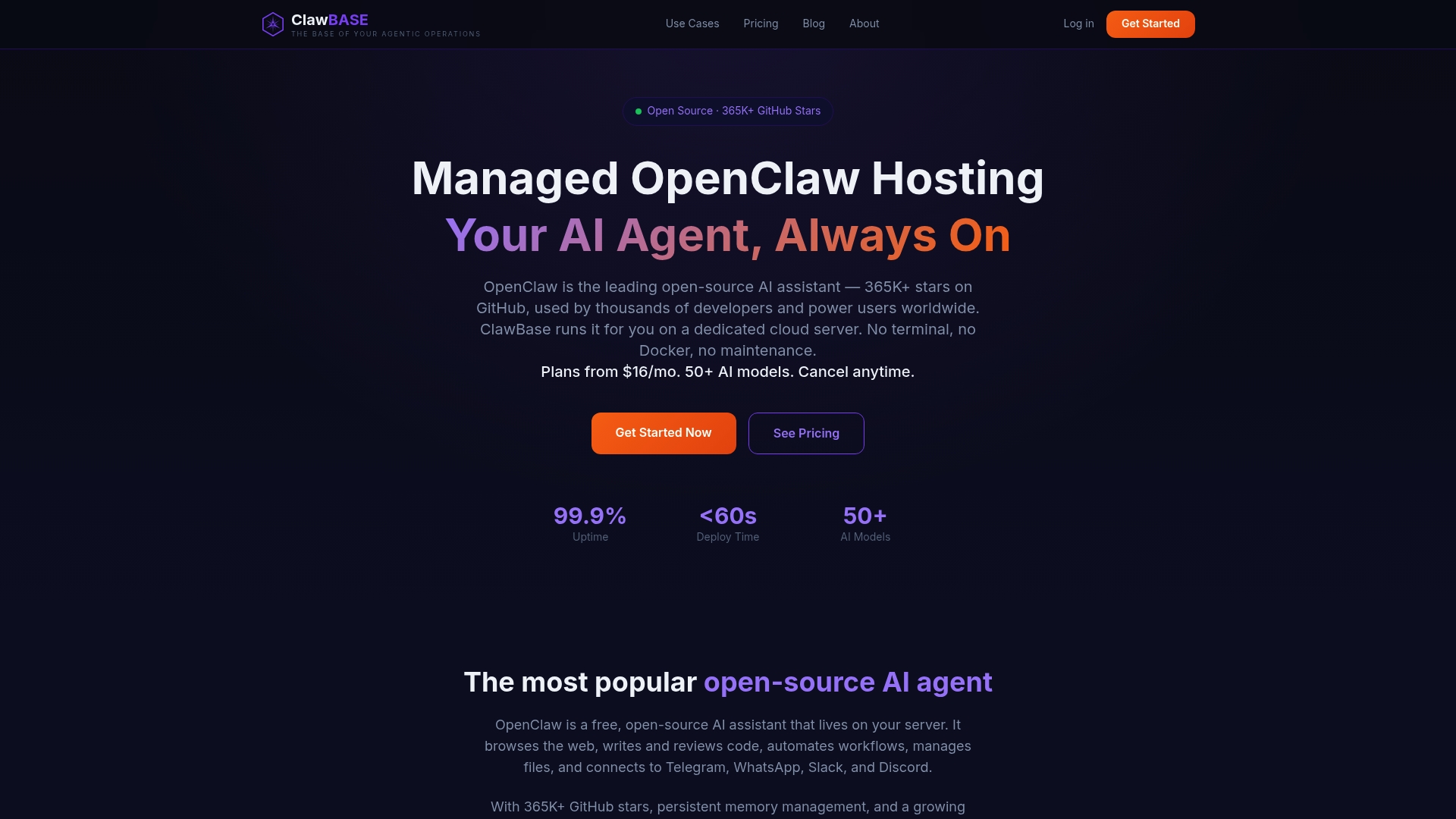
If your team wants the private-hosting route without managing a server yourselves, ClawBase handles the deployment, uptime, and updates while your team focuses on the workflows.
- Check the pricing page to compare LITE, PRO, and MAX plans for team-size needs.
- Browse real use cases to see how teams automate reporting, file management, and internal search.
- Start with the 7-day trial to test a shared assistant on your own channels before committing.
Sources
For governance, the NIST AI RMF and its Generative AI Profile are the primary references. For Teams and Copilot publishing steps, Microsoft's Copilot Studio documentation covers install links and admin approval in detail.
- Artificial Intelligence Risk Management Framework: Generative Artificial Intelligence Profile
- AI Risk Management Framework | NIST
- Connect and configure an agent for Teams and Microsoft 365 Copilot - Microsoft Copilot Studio | Microsoft Learn
- AI Meeting Assistant - Meetfy - App Store - Apple
FAQ
Can you share an AI agent with someone?
Yes. Depending on the platform, you can share an agent through an installation link, publish it to a team channel, or grant access through a managed shared account with role-based permissions.
What is the 30% rule for AI?
If you've seen it referenced elsewhere, treat it as an informal guideline rather than an official benchmark.
Does Teams have an AI assistant?
Yes, Microsoft Teams supports Copilot and custom agents built in Copilot Studio, which admins can publish and share through installation links or approval into the Built for your org section. Once approved, team members can add the agent to a channel and mention it directly.
Which 3 jobs will not survive AI?
No source in this article identifies specific jobs guaranteed to disappear because of AI, and making that claim without evidence would be irresponsible. What's better supported is that repetitive, template-driven tasks, like meeting notes or first-draft reports, are the ones most commonly automated first.