NIST Aligned Single Tenant AI Hosting: 7 Checks for Enterprise Architects
2026-09-25

Single-tenant AI hosting means one organization gets a dedicated server, isolated storage, and its own network path instead of sharing infrastructure with other customers. That isolation buys predictable latency, cleaner audit trails, and full control over data residency and model behavior. The trade-off is real: fixed costs run higher than shared or hourly options unless your workload runs hot enough to justify dedicated hardware, and someone has to own the operational burden.
***
> TL;DR:
>
> - Single-tenant AI hosting offers dedicated compute, storage, and networking resources, ensuring consistent performance and enhanced security for sensitive workloads.
> - Dedicated hardware significantly reduces latency variability by eliminating noisy-neighbor effects and supports custom inference environments more easily than shared infrastructure.
> - Security relies not only on physical isolation but also on encryption, customer-managed keys, and confidential computing to protect against infrastructure compromise.
> - Cost-effectiveness depends on utilization rates, becoming advantageous over shared hosting when usage exceeds approximately 35 to 60 percent of capacity.
> - Managed single-tenant solutions provide low-ops alternatives with integrated hardware, encryption, and updates, suitable for teams lacking resources for self-hosted infrastructure.
***
Table of Contents
- What Is Single-Tenant AI Hosting, and How Does It Differ From Multi-Tenant?
- Benefits and Trade-Offs Versus Multi-Tenant Hosting
- How Do You Secure and Govern a Single-Tenant AI Deployment?
- Why Dedicated GPUs and Networking Matter for AI Performance
- When Does Single-Tenant Hosting Make Financial Sense?
- What Should You Check Before Choosing a Single-Tenant AI Host?
- Self-Hosted, Managed, or Hybrid: Which Operational Model Fits?
- The Real Trade-Off Nobody States Plainly Enough
- A Managed Path to Dedicated AI Infrastructure
- Sources
- FAQ
What Is Single-Tenant AI Hosting, and How Does It Differ From Multi-Tenant?
Single-tenant AI hosting dedicates compute, storage, and network exclusively to one customer. Nobody else's inference jobs share your GPU, nobody else's data touches your storage volumes, and your network traffic never crosses paths with another tenant's requests. Multi-tenant hosting, by contrast, pools resources across many customers behind a shared router or orchestration layer, relying on software boundaries (namespaces, containers, access controls) rather than physical separation to keep tenants apart.
Microsoft's own architecture guidance for AI in multitenant solutions lays out this exact fork: you can run a shared model that serves every tenant through prompt engineering and metadata filtering, or you can provision tenant-specific models and infrastructure when isolation, customization, or compliance demands it. Most SaaS platforms default to shared inference because it's cheaper at scale. Enterprises with regulated data, fine-tuned proprietary models, or consistently high utilization tend to land on single tenancy instead.
The architectural building blocks look like this:
- Dedicated compute: GPUs or CPU pools reserved for one tenant, with no scheduling contention from other customers' jobs.
- Dedicated storage: Isolated volumes for model weights, embeddings, and logs, separate from any shared object store.
- Isolated networking: A private network path, often a VPC or dedicated VLAN, that keeps inference traffic off shared infrastructure.
- Shared-router contrast: Multi-tenant systems route requests through a common gateway that applies tenant identifiers at the application layer, which is efficient but depends entirely on software correctness for isolation.
If your workload involves patient records, financial data, or a fine-tuned model that represents real intellectual property, that software-only boundary starts to look thinner than it should.
Benefits and Trade-Offs Versus Multi-Tenant Hosting
Choosing single tenancy is a bet that isolation and predictability are worth paying for upfront. Here's how that bet plays out across the dimensions that actually matter to architects:
- Security and auditability. Dedicated infrastructure produces cleaner audit trails because every log entry, every access event, and every data flow belongs to one tenant. There's no need to prove your data never touched another customer's inference pipeline. You just show the isolation boundary.
- Performance predictability. Shared GPU environments suffer from noisy-neighbor effects: another tenant's batch job spikes and your p99 latency follows. Dedicated hardware eliminates that variance, and dedicated GPU hosting providers routinely back this with uptime SLAs in the 99.9% to 99.99% range.
- Flexibility for custom runtimes. Fine-tuned models, custom inference stacks, and nonstandard model formats deploy far more easily when you're not constrained by a shared platform's supported configurations.
- Cost and operational burden. This is the honest downside. Dedicated hardware costs more per hour than shared instances unless utilization stays high, and if you self-host, your team owns driver updates, capacity planning, and incident response.
The security case is the strongest argument for single tenancy, but it's not automatic. Isolation reduces risk; it doesn't eliminate the need for encryption, key management, and monitoring on top of it, which is exactly where the next section goes.
How Do You Secure and Govern a Single-Tenant AI Deployment?
Tenant isolation answers "can another customer see my data?" It doesn't answer "is my data protected if the infrastructure itself is compromised?" That second question requires encryption at rest and in transit, strong key management, and, for the most sensitive workloads, confidential computing.
Encryption at rest protects stored model weights, logs, and embeddings if a disk is ever physically compromised. Encryption in transit protects data moving between your application and the inference server. Neither one protects data while it's actively being processed in GPU memory, which is where confidential computing and trusted execution environments (TEEs) come in. TEEs create a hardware-isolated enclave where data stays encrypted even during computation, closing the gap that at-rest and in-transit encryption leave open. For workloads handling health records, financial data, or proprietary model weights, that gap is worth closing.
> Security architects consistently flag one gap: tenant isolation without encryption-in-use and customer-managed keys still leaves a meaningful attack surface open, because isolation alone assumes the infrastructure itself is trustworthy.
Governance frameworks give you a structure for mapping these controls instead of guessing. The NIST AI RMF Generative AI Profile offers suggested actions for governing, mapping, measuring, and managing risk across the AI lifecycle, and it's become the reference point that most enterprise security teams use when evaluating a vendor's AI infrastructure. For high-performance computing specifically, NIST SP 800-234 adapts roughly 60 controls from NIST SP 800-53 with supplemental guidance tailored to AI and HPC environments, addressing risks that generic cloud security frameworks don't cover well.
When you're evaluating a vendor, ask for these concretely instead of accepting a marketing page's word for it:
- A signed data processing agreement (DPA) with clear subprocessor disclosure
- Support for customer-managed encryption keys (CMKs), not only provider-managed encryption
- Encryption at rest implementation details, including key rotation policy
- Exportable audit logs covering access, inference requests, and administrative actions
- SOC 2 Type II or equivalent, and a signed BAA if the workload touches health data
Regulated workloads narrow the vendor pool fast. HIPAA and FedRAMP compliance are largely limited to major cloud hyperscalers and a small set of enterprise-focused hosts that can back their claims with actual certifications, so verify this before you fall in love with a smaller provider's pricing.
Why Dedicated GPUs and Networking Matter for AI Performance
Predictable latency starts with hardware, and hardware choice for AI inference or training is not a commodity decision. GPU classes split roughly into two tiers: high-memory-bandwidth cards like the A100 and H100, built for training and large-model inference where NVLink interconnects move data between GPUs at speeds a standard PCIe bus can't match, and inference-optimized cards like the L4 or L40S, which trade some raw throughput for better cost efficiency on smaller models and lighter workloads.
Dedicated GPU allocation is what actually delivers the latency guarantee, not the GPU model alone. When your inference server isn't sharing a card's scheduler with another tenant's batch job, your p99 latency stops depending on someone else's traffic pattern. That's the mechanical reason dedicated hardware supports tighter SLAs than shared instances can honestly promise.
Beyond the GPU itself, a few infrastructure details separate a well-specified deployment from one that looks fine in a demo and falls apart in production:
- NVMe local scratch storage: Pre-warmed model processes paired with fast local scratch disks cut cold-start latency more effectively than adding GPU memory, which matters enormously for customer-facing APIs, where a slow first response costs conversions.
- Egress allowances: Data leaving the environment (model outputs, logs shipped to your SIEM) often carries per-gigabyte fees that balloon at scale if you don't negotiate a cap upfront.
- Throughput guarantees: Ask for a specific number, not "high-speed networking." Sustained bandwidth between storage and compute determines whether large model loads finish in seconds or minutes.
- Interconnect topology: For multi-GPU training or large mixture-of-experts models, NVLink or InfiniBand bandwidth between cards matters as much as the cards themselves.
A dedicated AI server spec sheet that skips these details is worth a follow-up question before you sign anything.
When Does Single-Tenant Hosting Make Financial Sense?
Billing shapes for AI compute generally fall into four buckets: hourly or spot pricing for burstable, unpredictable workloads; serverless per-token pricing for low-volume or experimental use; fixed monthly or reserved pricing for dedicated hardware; and enterprise contracts that bundle support, SLAs, and volume discounts.
The break-even question comes down to utilization. Practitioner analysis of the GPU cloud market suggests fixed-price dedicated hosts start winning economically once sustained utilization crosses roughly 35% to 60%, depending on the specific hourly rate you're comparing against. Below that threshold, hourly or spot pricing usually wins because you're not paying for idle capacity. Above it, the math flips, and a fixed monthly commitment becomes cheaper than metered usage stacking up hour after hour.
Budget for costs that don't show up on the headline price:
- Egress fees for model outputs, log shipping, and backup transfers, which can quietly exceed the compute bill for chatty applications.
- Long-term commit penalties if your workload shrinks and you're locked into a 12 or 24-month reserved contract.
- Support and SRE overhead, especially if you're self-hosting and need on-call coverage for driver issues or capacity incidents.
- Model-serving software licensing, since some inference frameworks charge separately from the underlying compute.
Run the utilization math before you commit to a fixed contract, not after the first invoice arrives.
What Should You Check Before Choosing a Single-Tenant AI Host?
Procurement conversations go faster when you walk in with a checklist instead of reacting to whatever the vendor's sales deck emphasizes. Work through these in order:
- Isolation guarantees. Is compute physically dedicated, or logically separated within shared hardware? Get this in writing, not in a sales call.
- Encryption and key control. Does the vendor support customer-managed keys, or only provider-managed encryption you have no control over?
- Certifications. SOC 2, HIPAA BAA availability, FedRAMP status if you're in the public sector or handling federal data.
- SLA terms. What's the actual uptime number, and more importantly, what are the credit terms when it's missed?
- Region and data residency. Can you pin data and inference to a specific geography, and is that contractually guaranteed?
- Supported runtimes and model formats. Does your fine-tuned model or preferred framework actually run there without a rebuild?
- Service and SRE coverage. Who gets paged at 3 a.m. if inference latency spikes, you or the vendor?
Pro Tip: *Ask every vendor for their subprocessor list in writing during the RFP, not after signing. A vendor that hedges on naming who touches your data is telling you something important about how seriously they take isolation.*
Red flags worth walking away from: no DPA offered, a subprocessor list that's vague or "available on request" indefinitely, no CMK support roadmap, and SLA credit language that caps refunds at a token percentage of monthly fees.
Self-Hosted, Managed, or Hybrid: Which Operational Model Fits?
Self-hosting single-tenant AI infrastructure means your team owns everything: OS and driver patching, keeping the NVIDIA stack current, capacity planning, and incident response when something breaks at 2 a.m. It's the most flexible path, and it's also the one that quietly consumes an engineer's entire week if you're not staffed for it.

Managed single-tenant hosting shifts that operational load to the provider. Typically that means the vendor handles SLA enforcement, encrypted backups, security patching, and monitoring, while you keep configuration control over the model and application layer. This is why managed AI services have gained traction with teams that want dedicated infrastructure without hiring a dedicated ops function to run it.
Hybrid or co-managed setups split the difference: your team owns the application layer and model logic, the provider owns infrastructure and patching. This fits teams with strong software engineers but no bandwidth for GPU driver management.
The Real Trade-Off Nobody States Plainly Enough
Most vendor pitches frame single-tenant hosting as a security upgrade, full stop. That's incomplete. The honest framing is that dedicated infrastructure trades flexibility for predictability, and predictability only pays off if your team actually has the operational discipline to use it well. It's just more expensive.
Where I land: pilot on shared or hourly infrastructure until your utilization pattern and compliance requirements are clear, then move to dedicated hardware once you know you'll actually use it. Teams that want the isolation without building an SRE function around it are better served by a managed single-tenant option than a DIY deployment they don't have headcount to maintain.
> *— Iosif Peterfi*
A Managed Path to Dedicated AI Infrastructure
There are low-ops alternatives to building and babysitting your own single-tenant deployment.
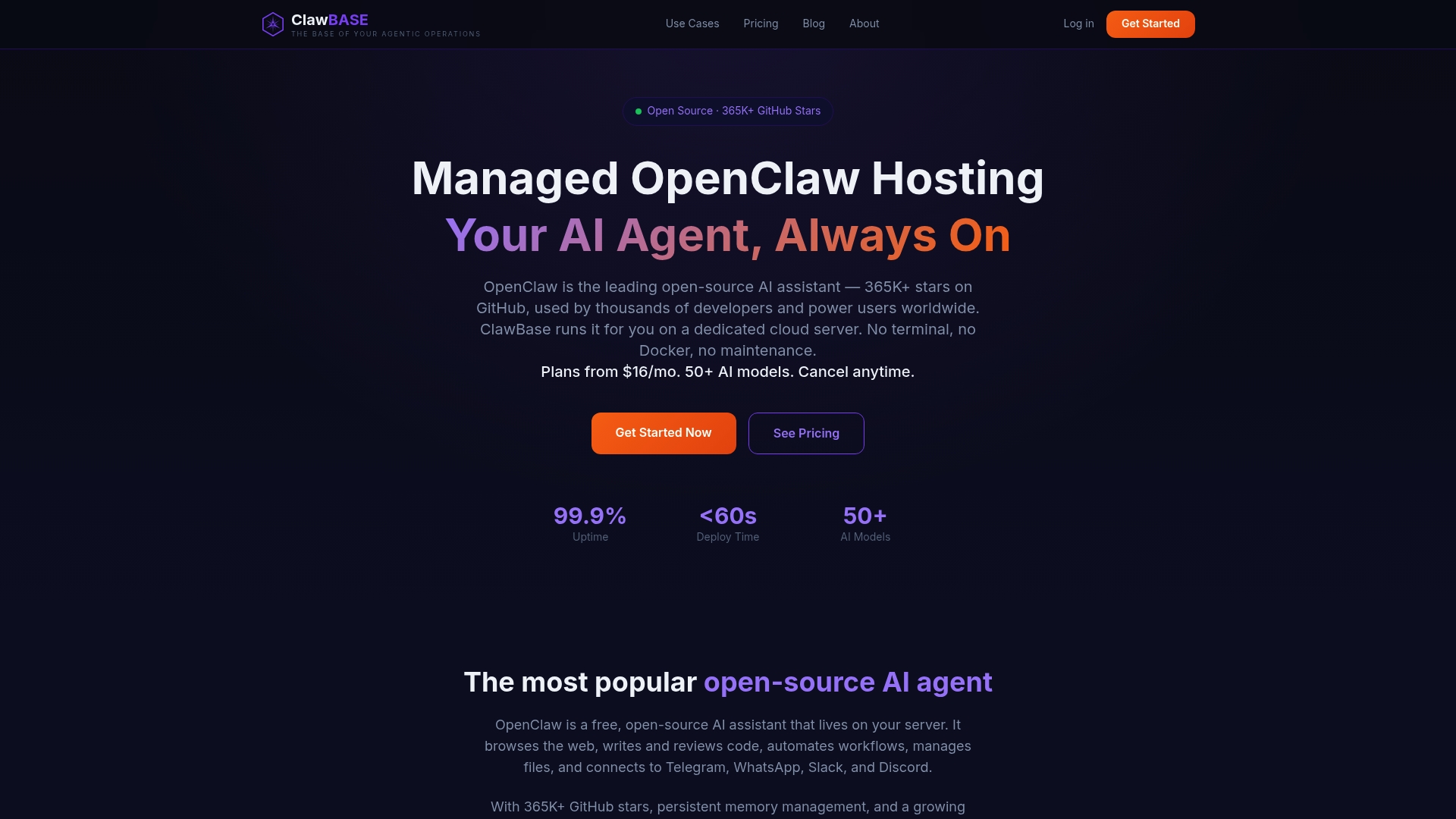
That covers most of the checklist from earlier in this article without the procurement cycle: dedicated hardware instead of shared compute, encrypted servers instead of a DIY security build, and automated updates instead of a driver-patching rotation your team has to own. Connections to Telegram, Discord, Slack, and WhatsApp mean the assistant plugs into workflows your team already uses, and the private skillset marketplace lets you extend it without custom engineering.
Pricing starts at $16 a month on the LITE plan, with PRO and MAX tiers scaling up for teams that need more headroom, and a 7-day free trial on the entry plan if you want to test it before committing. Check current pricing and plan details or browse real use cases to see what a dedicated AI assistant looks like in practice before you decide.
Sources
For deeper reading: the NIST AI RMF Generative AI Profile, NIST SP 800-234 on HPC security, and Microsoft's multitenant AI architecture guidance cover the frameworks referenced throughout this article. Teams auditing their own infrastructure exposure can also run a crawlability audit to check how AI systems interact with public-facing assets.
- Artificial Intelligence Risk Management Framework: Generative Artificial Intelligence Profile
- NIST SP 800-234: High Performance Computing Security Overlay
- GPU Cloud Comparison for AI Inference: 2026 Reality Check
- Architectural approaches for AI and machine learning in multitenant solutions
FAQ
Is SaaS single-tenant or multi-tenant?
Most SaaS platforms default to multi-tenant architecture because it's cheaper to operate at scale, pooling compute and storage across many customers behind shared infrastructure. Some SaaS vendors offer single-tenant deployments specifically for customers who need dedicated infrastructure and data isolation.
What is a tenant in AI hosting?
A tenant is a single customer or organization whose data and workloads run on a given piece of infrastructure. In single-tenant AI hosting, one tenant has exclusive use of the compute, storage, and network; in multi-tenant hosting, many tenants share the same underlying infrastructure with software-level separation.
What's the difference between single-tenant and multi-tenant cloud computing?
Single-tenant cloud computing dedicates physical or virtual infrastructure to one customer, while multi-tenant computing pools that infrastructure across many customers using logical isolation like namespaces and access controls. The trade-off is cost versus control: multi-tenant is cheaper per unit but relies entirely on software boundaries, while single-tenant costs more but removes shared-infrastructure risk.
Is Kafka multi-tenant?
Apache Kafka can support multiple tenants on a shared cluster using topic-level access controls and quotas, but it wasn't originally designed with strict tenant isolation as a core feature. Organizations with strict compliance needs often run dedicated Kafka clusters per tenant rather than relying on shared-cluster access controls alone.
How much does managed single-tenant AI hosting cost?
Pricing varies widely by provider and hardware tier. Clawbase's managed OpenClaw hosting starts at $16 a month on the LITE plan, with PRO and MAX tiers available for teams needing more capacity, and current pricing details are always listed on the pricing page.