AI Homework Assistance Explained for Students and Parents
2026-07-02

AI homework assistance is defined as AI-powered platforms that use Large Language Models and Natural Language Processing to deliver step-by-step academic support, personalized explanations, and guided problem solving. The industry term for the broader category is "AI tutoring," and understanding what is AI homework assistance explained correctly matters because these tools work very differently from a simple search engine or answer generator. They adapt to each student's level, break down complex problems into manageable steps, and build genuine concept mastery. This article covers how the technology works, what features to expect, how to use these tools responsibly, and where the real limitations lie.
What is AI homework assistance explained?
AI homework assistance is built on two core technologies: Large Language Models (LLMs) and Natural Language Processing (NLP). LLMs provide step-by-step reasoning and conceptual explanations by analyzing a student's input and adapting the complexity of the response to match their level. That adaptability is what separates AI tutoring from a static textbook or a Google search result.
NLP is the layer that lets the system understand what a student is actually asking. When a student types "I don't get why the quadratic formula works," NLP parses the intent behind that question and routes it to the right reasoning chain inside the model. The result is a response that addresses the conceptual gap, not just the surface question.

The pedagogical approach behind effective AI study help mirrors what good human tutors do. High-impact AI tutors replicate human scaffolding by guiding students through steps, asking for formulas or approaches before showing solutions. This method deepens retention far more than simply handing over a final answer. Think of it as the difference between a coach who asks "what do you think the next move is?" versus one who just plays the game for you.
How does AI tutoring technology adapt to each student?
The adaptation mechanism in AI tutoring works through a feedback loop. The system tracks which types of questions a student struggles with, adjusts the difficulty of follow-up problems, and shifts its explanation style based on prior responses. This is not a fixed script. It is a dynamic process that changes with every interaction.
Scaffolding is the key pedagogical technique at work here. Effective AI tutoring systems mirror human scaffolding by breaking a problem into smaller steps and prompting the student to attempt each one before revealing the next. A student working through a chemistry stoichiometry problem, for example, would be asked to identify the known variables first, then set up the ratio, then calculate. The AI does not skip ahead.
Personalized feedback is another layer. When a student makes an error, a well-designed AI learning assistance tool does not just mark it wrong. It explains why the approach failed and suggests a corrected path. Proactive personalization means the AI infers knowledge gaps and suggests the next learning priorities automatically, which is especially useful for students who do not know what they do not know.
Key capabilities you will find in most AI homework support tools include:
- Step-by-step problem solving across math, science, history, and language arts
- Concept explanations that adjust in depth based on prior student responses
- Practice quiz generation tied to specific topics or uploaded course materials
- Error logging that tracks recurring mistakes for targeted review
- Note summarization that condenses long readings into key points
Pro Tip: *Ask the AI to explain a concept three different ways. If one explanation does not click, a second framing often does. This is a technique human tutors use instinctively, and AI tutoring tools handle it well.*
What features and benefits do AI homework tools offer?
The feature set of AI homework tools has expanded significantly. Many tools offer free tiers with basic features like explanations and flashcards, while advanced capabilities such as personalized study plans and error tracking typically require paid subscriptions. That pricing structure means students can test the core functionality before committing to a premium plan.
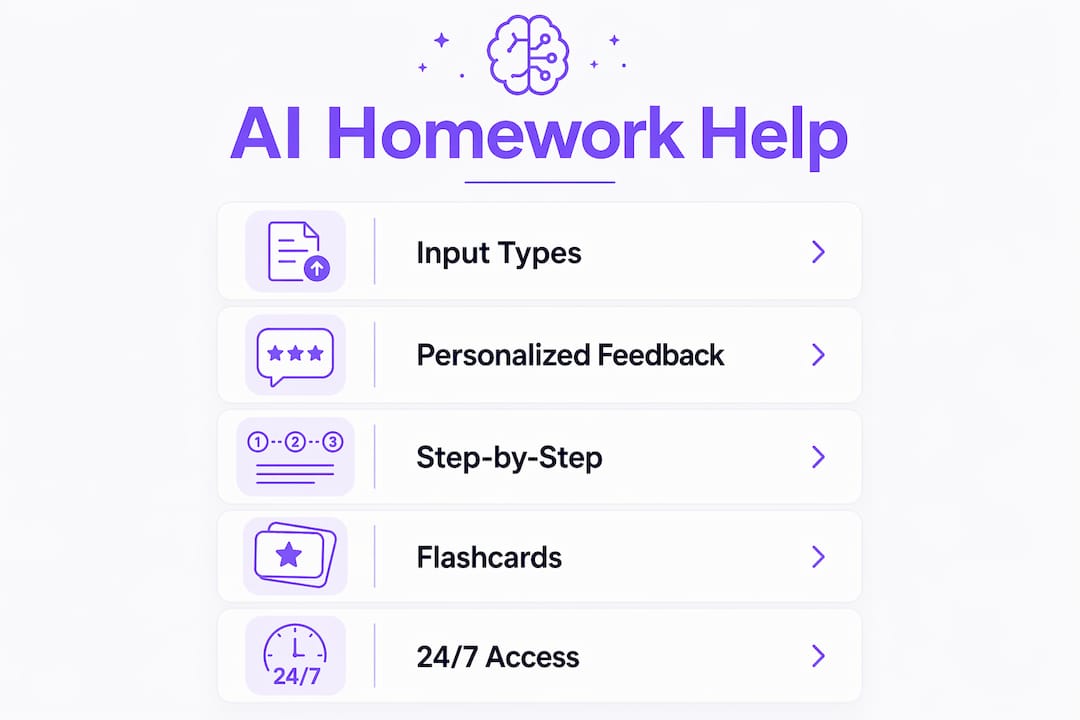
The most practical benefit is availability. AI study help is accessible at 11 p.m. before a test, on a Sunday afternoon, or during a study session when no tutor is available. That 24/7 access removes one of the biggest barriers students face: waiting for help until the next school day.
Personalized learning through diagnostic quizzes and spaced repetition improves learning outcomes over non-adaptive methods. A longitudinal study showed improved student trajectories when practice problem sequences were personalized. Spaced repetition, in particular, schedules review sessions at the exact intervals that maximize long-term memory retention.
Multi-modal input support is a feature worth noting. Several AI homework tools now accept images alongside text, meaning a student can photograph a handwritten math problem or a diagram from a textbook and receive a response based on that visual input. This is a meaningful step beyond text-only interfaces. For a deeper look at how multi-model AI support works across different input types, the underlying model architecture matters more than most students realize.
| Feature | Free tier | Premium tier |
|---|---|---|
| Step-by-step explanations | Yes | Yes |
| Flashcard generation | Yes | Yes |
| Personalized study plans | Limited | Full |
| Error tracking and analytics | No | Yes |
| Course material upload | No | Yes |
How should students use AI homework help responsibly?
The biggest risk with AI homework assistance is cognitive offloading. That is the habit of letting the AI do the thinking while the student passively reads the output. Passive reading feels productive but produces very little actual learning. The student who copies an AI explanation without engaging with it will struggle on the next test.
Responsible use follows a clear pattern:
- Attempt the problem first. Write out your reasoning before asking the AI anything. This activates prior knowledge and makes the AI's feedback more meaningful.
- Ask for hints, not answers. Request the first step only. Work through it, then ask for the next step if needed.
- Use the AI to generate practice questions. After learning a concept, ask the AI to quiz you on it. AI as a feedback system promoting active recall produces better results than passive reading of explanations.
- Upload your course materials. AI tools grounded in specific course content deliver explanations aligned with your instructor's methodology. Generic explanations often miss the nuances your teacher expects.
- Verify every answer. Cross-check AI output against your textbook or class notes, especially for advanced subjects. This is not optional.
- Combine AI help with traditional methods. Flashcards, study groups, and handwritten notes each reinforce learning in ways AI cannot fully replicate.
Pro Tip: *After finishing a homework session with AI help, close the tool and write a one-paragraph summary of what you learned from memory. This retrieval practice is one of the most well-supported techniques in learning science, and it takes less than five minutes.*
For students new to these tools, a guide on using AI without technical skills covers the practical setup steps clearly.
What are the real limitations of AI homework assistance?
AI homework tools are not infallible. LLMs can hallucinate, meaning they sometimes produce confident-sounding answers that are factually wrong. Students must verify AI-generated answers against course-specific materials, especially in subjects like calculus, chemistry, or advanced history where precision matters. Blind trust in AI output is the fastest way to lose points on an assignment.
The quality of AI homework tools varies widely. Entry-level tools may offer only surface-level explanations with no error tracking or personalization. More capable platforms use adaptive algorithms and course-specific grounding. Choosing the wrong tool means getting generic responses that do not match your instructor's expectations or your curriculum's depth.
Common misconceptions worth addressing directly:
- "AI will do my homework for me." It can, but that produces zero learning and creates dependency. The goal is understanding, not output.
- "AI is always accurate." It is not. Hallucinations are a documented behavior of LLMs, particularly on niche or highly technical topics.
- "AI tutoring replaces a teacher." It does not. AI cannot read a classroom's social dynamics, adjust to a student's emotional state, or provide the mentorship a good teacher offers.
- "All AI homework tools are the same." They are not. The underlying model, the pedagogical design, and the grounding in course content vary significantly across platforms.
Educators are also increasingly aware of AI-generated content. Many institutions now use detection tools to identify work that was produced by AI rather than the student. Using AI as a learning aid is appropriate. Submitting AI output as your own work is academic dishonesty.
Key Takeaways
AI homework assistance works best as an active learning tool, not a shortcut. Students who engage with AI explanations, generate practice questions, and verify outputs against course materials see the strongest academic gains.
| Point | Details |
|---|---|
| Core technology | LLMs and NLP power AI tutoring by adapting explanations to each student's level. |
| Scaffolding method | Effective AI tools break problems into steps and prompt attempts before revealing answers. |
| Responsible use | Always attempt problems first and use AI for hints and practice, not final answers. |
| Verify all outputs | LLMs can hallucinate, so cross-check AI answers with textbooks or instructor materials. |
| Course grounding | Uploading course materials aligns AI explanations with your instructor's specific methodology. |
AI homework assistance is evolving faster than most curricula can track
I have spent a lot of time testing AI tutoring tools across different subjects and student levels, and the gap between a well-designed AI homework assistant and a poorly designed one is enormous. The best tools I have used ask the student a question before answering one. That single design choice changes everything about how learning happens.
What I find most interesting is the shift toward proactive personalization. The tools that identify knowledge gaps before the student even recognizes them are the ones that produce real academic growth. Angel Tsai-Hsuan Chung's research at Wharton on this point is worth reading carefully. The idea that an AI can infer what you do not know and prioritize it in your study session is not science fiction. It is already in production.
My honest concern is dependency. Students who skip the "attempt first" step and go straight to AI explanations are building a habit that will hurt them in exams and in life. The retrieval practice principle is not new. What is new is having a tool that can generate unlimited practice questions on demand. That is a genuine advantage, but only if the student actually uses it for practice rather than passive consumption.
The educational frameworks integrating AI most effectively treat it as a layer on top of traditional study methods, not a replacement. That framing is right. AI homework assistance is a powerful amplifier. What it amplifies depends entirely on the habits the student brings to it.
> *— Iosif Peterfi*
How Clawbase supports AI-powered learning tools
Building a custom AI homework assistant used to require significant server setup, model configuration, and ongoing maintenance. Clawbase removes all of that. With one-click deployment on a dedicated server, Clawbase gives students, parents, and educators access to a private, always-on AI agent powered by OpenClaw, with no technical skills required.
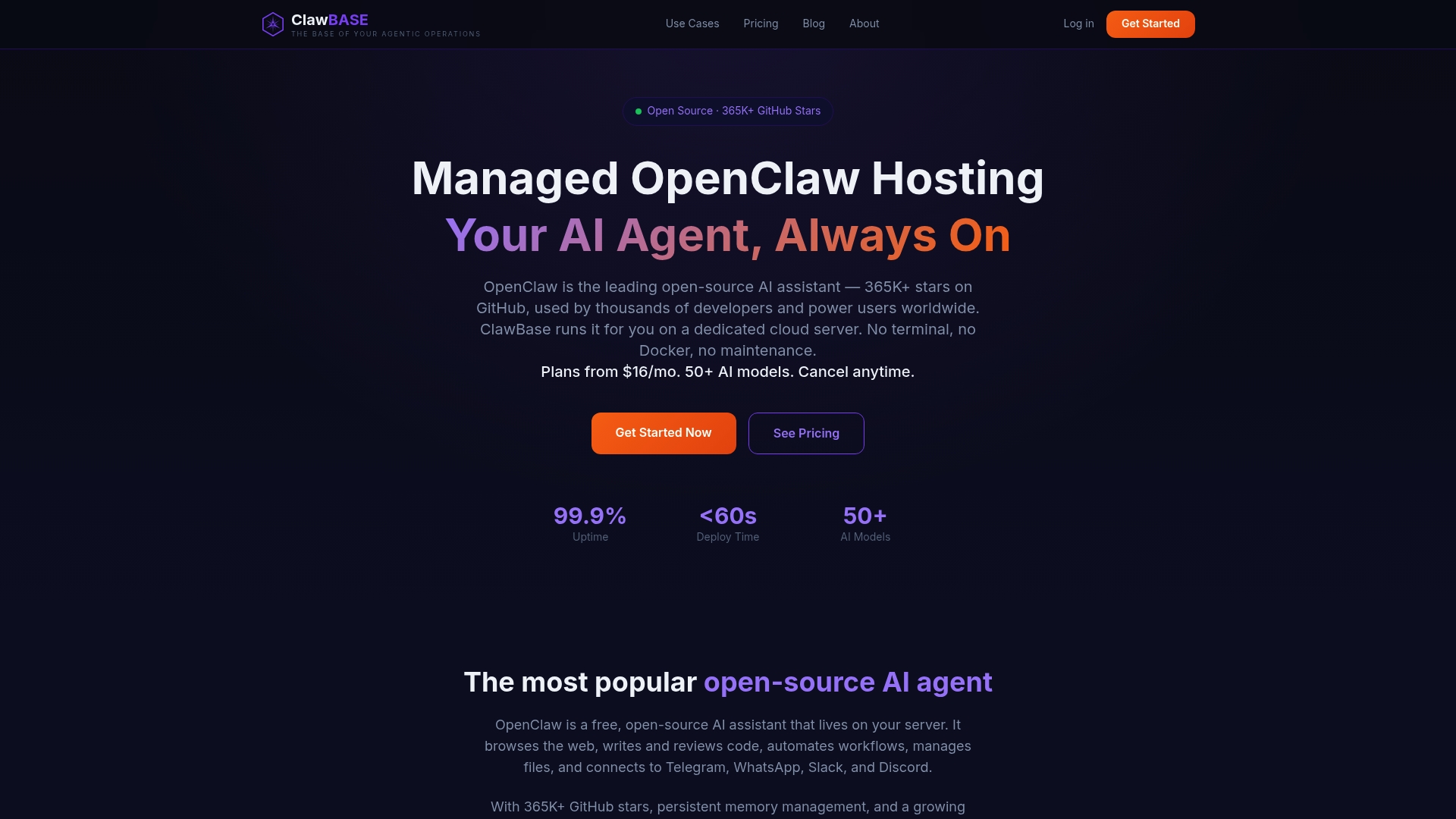
Clawbase provides access to over 50 AI models, persistent memory management, and 99.9% uptime. That means a student's AI tutor remembers previous sessions, tracks recurring errors, and stays available around the clock. For anyone building or using an AI learning tool, the OpenClaw use cases page shows exactly what these agents can do in educational and productivity contexts. Clawbase makes that capability accessible without a single line of code.
FAQ
What is AI homework assistance?
AI homework assistance is defined as AI-powered platforms that use Large Language Models and Natural Language Processing to provide step-by-step academic support, concept explanations, and personalized study plans. The goal is guided learning, not answer delivery.
Is AI tutoring the same as AI homework help?
AI tutoring is the broader category. AI homework assistance is a specific application of AI tutoring focused on completing and understanding assignments. Both rely on the same underlying LLM and NLP technology.
Can AI homework tools replace a human tutor?
AI homework tools cannot replace a human tutor. They lack the ability to read emotional cues, provide mentorship, or adapt to classroom-specific context the way a teacher can. They work best as a supplement to human instruction.
How do I avoid becoming dependent on AI for homework?
Always attempt problems before asking the AI for help, request hints rather than full solutions, and use the tool to generate practice questions after learning a concept. This approach builds independent problem-solving skills.
Are AI homework answers always accurate?
No. LLMs can hallucinate and produce confident but incorrect answers, especially on advanced topics like calculus or chemistry. Always verify AI output against your textbook or course materials before submitting any work.