AI Compliance Assistance Explained for Business Professionals
2026-07-13

AI compliance assistance is the practice of ensuring AI systems operate within established legal and ethical frameworks by providing automated controls, governance structures, and verifiable audit trails across the AI lifecycle. Compliance officers and business professionals increasingly face this challenge as regulators in the US, EU, and beyond introduce binding requirements for AI systems. The field draws on frameworks like the NIST AI Risk Management Framework and the EU AI Act, both of which define what "what is ai compliance assistance explained" means in operational terms. Understanding AI compliance is no longer optional for organizations deploying AI in regulated industries. The stakes include regulatory fines, reputational damage, and failed audits.
What are the core components of AI compliance assistance?
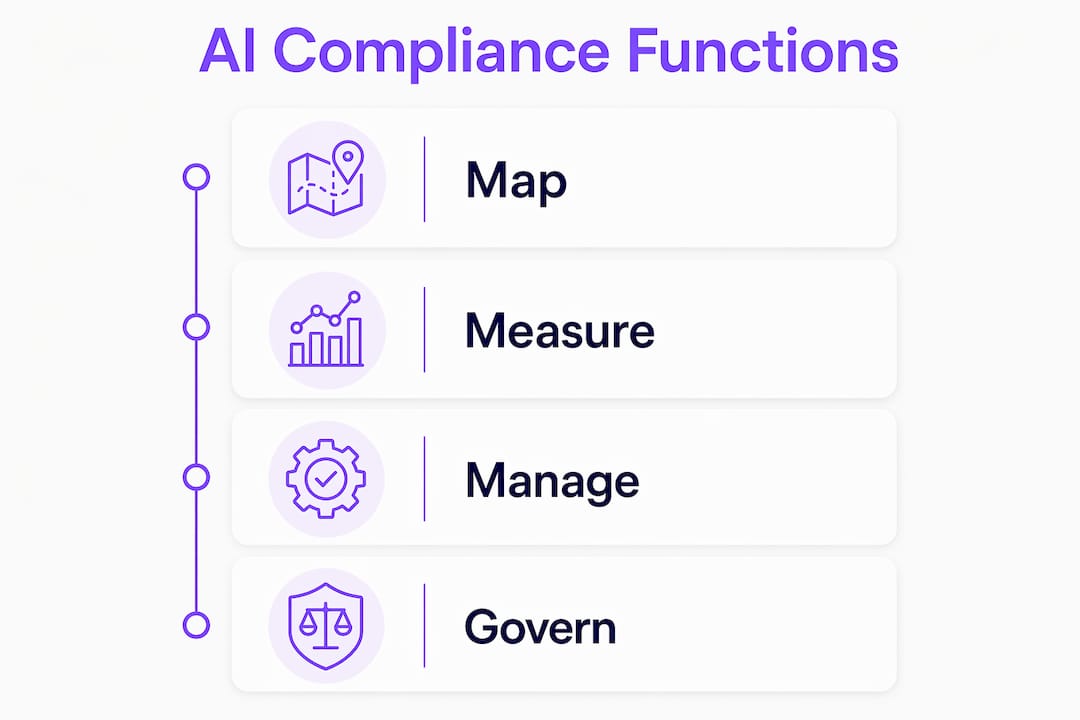
AI compliance assistance rests on four operational functions defined by the NIST AI RMF: Map, Measure, Manage, and Govern. Each function addresses a distinct phase of the AI lifecycle, from identifying AI assets to enforcing ongoing controls. Auditors treat this framework as a baseline when evaluating organizational readiness.

The EU AI Act adds a regulatory layer on top of operational frameworks. It classifies AI systems by risk across four tiers, with high-risk systems facing the most demanding requirements. The Act entered force on August 1, 2024, meaning organizations deploying AI in employment, credit, healthcare, or critical infrastructure must meet binding obligations now.
The core components of AI compliance assistance include:
- AI inventory and asset mapping: Cataloging every AI system in use, including third-party tools and embedded models.
- Risk classification: Assigning each system a risk tier based on its use case and potential impact on individuals.
- Technical documentation: Producing records of model training, validation, data sources, and deployment decisions.
- Human oversight controls: Building checkpoints where humans review and approve AI decisions in high-risk contexts.
- Governance and accountability structures: Assigning named individuals to compliance roles with clear decision chains.
ISO/IEC 42001 provides a certification pathway for organizations that want third-party validation of their AI management systems. It complements the NIST AI RMF by offering an auditable standard that regulators and procurement teams recognize. Together, these frameworks form the structural backbone of any mature AI compliance program.
One distinction compliance officers often miss: AI governance defines intent, while AI compliance is operational execution that proves legal adherence. Governance sets the policies. Compliance generates the evidence that those policies are followed.
How do AI compliance tools improve audit readiness?
AI compliance tools automate the most labor-intensive parts of the compliance process. They combine AI inventory management, data lineage tracking, and runtime monitoring in a single system, replacing spreadsheets and manual reviews with continuous, machine-generated evidence. That shift matters because regulators do not accept reconstructed or incomplete logs.
The operational benefits of AI compliance software include:
- Automated AI discovery: The platform scans networks and endpoints to find sanctioned and unsanctioned AI tools in use.
- Data lineage tracking: Every data input and transformation is logged, creating a traceable chain from raw data to model output.
- Runtime monitoring: The system watches live AI interactions for policy violations, bias signals, and anomalous behavior.
- Real-time policy enforcement: Violations trigger automated blocks or alerts before they become audit findings.
- Audit trail generation: Every model decision, approval, and configuration change is timestamped and stored in a persistent log.
Pro Tip: *Set up automated AI audit logging from day one of any AI deployment. Retrofitting logging after the fact is expensive and often produces incomplete records that fail regulatory review.*
The reduction in manual labor is significant. Compliance teams that previously spent weeks assembling audit packages can generate them on demand. That speed directly reduces the cost of regulatory examinations and internal reviews. It also frees compliance officers to focus on risk analysis rather than data collection.
AI compliance software transforms manual compliance processes into continuous programs. Every AI interaction is monitored, and policy violations are prevented proactively rather than discovered after the fact.
What makes AI compliance different from traditional IT compliance?
Traditional IT compliance operates on point-in-time assessments. An auditor reviews controls at a specific date, issues a finding, and the organization remediates. AI compliance cannot work that way. AI's probabilistic nature means model behavior changes over time without any human intervention, a phenomenon called model drift.
The unique challenges that separate AI compliance from conventional IT compliance include:
- Model drift: A model trained on last year's data may produce biased or inaccurate outputs today, even if no one changed the code.
- Bias monitoring: Compliance programs must continuously test model outputs for disparate impact across demographic groups.
- Explainability requirements: Regulators increasingly require organizations to explain why an AI system made a specific decision, which is difficult when models function as black boxes.
- Shadow AI: Employees adopt unsanctioned AI tools without IT or compliance awareness, creating unmonitored risk exposure.
- Incident accountability: When an AI system causes harm, compliance programs must produce a clear chain of decisions and approvals, not just a system log.
Visibility precedes control. Organizations cannot enforce policy on AI tools they do not know exist. Shadow AI is the single largest blind spot in most corporate compliance programs today.
The explainability challenge is particularly acute for high-risk systems under the EU AI Act. High-risk AI systems in employment, credit, and medical device contexts must meet conformity assessment requirements that include documentation of how decisions are made. A model that cannot be explained cannot be certified.
What steps should organizations take to implement AI compliance?
Effective AI compliance programs follow a structured sequence. Skipping steps, especially the governance foundation, produces programs that look complete on paper but fail under audit pressure. Starting with governance frameworks that define accountability and approval processes is the prerequisite before deploying any technical tools.
- Establish a governance framework. Assign named individuals to AI compliance roles. Define who approves new AI deployments, who owns risk remediation, and who signs off on audit responses. Failure to establish clear accountability is the leading cause of compliance program failures when incidents occur.
- Map your AI inventory. Catalog every AI system in use across the organization, including embedded models in third-party software. This step surfaces shadow AI and creates the asset register that all subsequent controls depend on.
- Classify risk and map regulations. Apply the EU AI Act's four-tier risk system and the NIST AI RMF's Map function to each asset. Identify which regulations apply to each system based on its use case and the jurisdictions where it operates.
- Deploy continuous monitoring and logging. Implement runtime monitoring for bias, drift, and policy violations. Persistent real-time logs of model training, validation, and deployment approval are non-negotiable for passing regulatory audits.
- Integrate compliance into the AI product lifecycle. AI compliance must be embedded in product development, procurement, and risk management, not treated as a one-off audit. Build compliance checkpoints into sprint reviews, vendor assessments, and model release processes.
- Train employees and address shadow AI. Run regular training on approved AI tools and acceptable use policies. Pair training with technical controls that detect and block unsanctioned AI usage.
Pro Tip: *Use managed AI services that include built-in audit logging and access controls. They reduce the compliance engineering burden significantly compared to self-hosted deployments.*
Automation, clear accountability, and continuous monitoring are the three factors that separate effective AI compliance programs from ones that fail under regulatory scrutiny. Organizations that treat compliance as a living program, not a project, consistently outperform those that do not.
Key Takeaways
AI compliance assistance requires continuous monitoring, governance accountability, and automated audit trails to meet regulatory demands from frameworks like the EU AI Act and NIST AI RMF.
| Point | Details |
|---|---|
| Governance comes first | Assign named accountability before deploying any compliance tools or controls. |
| NIST AI RMF is the baseline | Map, Measure, Manage, and Govern define the operational structure auditors expect. |
| Automation replaces manual review | AI compliance platforms generate persistent audit trails that regulators require in real time. |
| Shadow AI is the biggest blind spot | Discovering unsanctioned AI tools is the prerequisite for enforcing any compliance policy. |
| AI compliance is continuous, not periodic | Model drift and bias require ongoing monitoring, not point-in-time assessments. |
Why I think most organizations are approaching AI compliance backward
Most compliance programs I have observed start with tools. A team buys a monitoring platform, configures some dashboards, and calls it a compliance program. That approach fails because the tools have nothing to enforce without a governance framework underneath them.
The regulatory complexity compounds this problem. The EU AI Act, NIST AI RMF, ISO/IEC 42001, and sector-specific rules like HIPAA and FCRA all apply simultaneously to many organizations. Fragmentation across jurisdictions means a single AI system might face five different compliance obligations. Trying to manage that manually is not just inefficient. It is structurally impossible at scale.
The shadow AI problem is the one that keeps me most focused. Employees are adopting AI tools faster than compliance teams can track them. I have seen organizations with formal AI governance programs that had no visibility into dozens of AI tools their own employees were using daily. Visibility is not a nice-to-have. It is the foundation of the entire program.
The future of AI compliance assistance is automation paired with persistent infrastructure. Organizations that build compliance into their AI hosting and deployment environments from the start will spend far less on remediation than those that bolt it on later. The compliance burden is not going away. The only question is whether you absorb it proactively or reactively.
> *— Iosif Peterfi*
Clawbase: AI hosting built with compliance in mind
Compliance-ready AI infrastructure starts at the hosting layer. Clawbase provides managed OpenClaw hosting with 99.9% uptime, persistent memory management, and access to over 50 AI models, all deployed on a dedicated server with one-click setup.
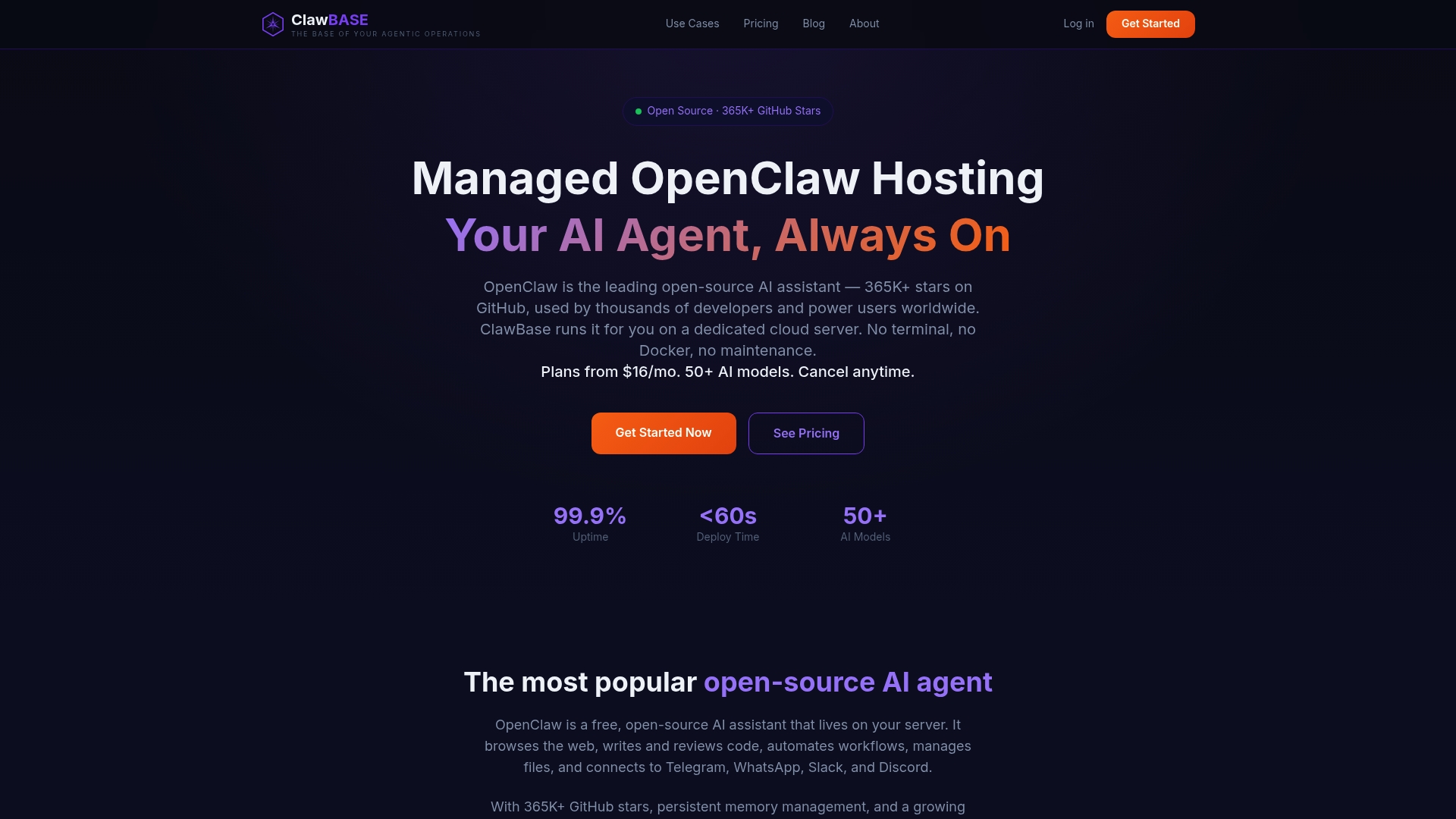
For compliance officers, the operational advantage is real. Clawbase's always-on architecture supports the continuous monitoring and persistent logging that regulators require, without the sysadmin overhead of self-hosted deployments. Audit trails, access controls, and workflow automation are built into the environment rather than added as afterthoughts. Teams that need to reduce manual compliance work while maintaining audit readiness will find Clawbase's managed environment a practical fit. Explore Clawbase hosting plans starting at $16/month.
FAQ
What is AI compliance assistance?
AI compliance assistance is the combination of governance frameworks, technical controls, and automated monitoring that ensures AI systems meet legal, regulatory, and ethical requirements throughout their lifecycle.
How does the EU AI Act affect AI compliance programs?
The EU AI Act, which entered force on August 1, 2024, classifies AI systems by risk tier and requires high-risk systems to meet conformity assessments, human oversight controls, and technical documentation standards.
What is the NIST AI Risk Management Framework?
The NIST AI RMF defines four core compliance functions: Map, Measure, Manage, and Govern. Auditors treat it as the operational baseline for evaluating AI risk management across the system lifecycle.
Why is shadow AI a compliance risk?
Shadow AI refers to unsanctioned AI tools employees use without IT or compliance awareness. These tools create unmonitored risk exposure and cannot be governed until they are discovered and inventoried.
How do AI compliance tools differ from traditional IT compliance tools?
AI compliance tools address continuous risks like model drift, bias, and explainability that traditional IT compliance tools are not designed to detect. They generate real-time audit logs rather than point-in-time assessment reports.