Beginner AI Assistant Checklist: 10 Steps to Start
2026-06-28

A beginner AI assistant checklist is a structured set of steps that helps newcomers use AI tools effectively from day one. Most people who try AI assistants quit within a week because they pick the wrong task, expect perfect results, or get lost choosing between tools. This guide cuts through that noise. You will find a practical, no-code checklist for AI beginners that builds real habits fast, using tools like ChatGPT, Claude, and Gemini as your starting points. The AI assistant market is projected to reach $21.11 billion by 2030, which tells you this technology is not a passing trend.
1. What belongs on your beginner AI assistant checklist
The core purpose of any AI starter checklist is to reduce decision fatigue and build one productive habit at a time. Beginners who try to do everything at once with AI tools almost always burn out or give up. The checklist format works because it gives you a clear sequence. You finish one step, confirm it works, then move to the next.
The checklist covers five main areas: task selection, tool setup, prompt writing, output review, and workflow integration. Each area builds on the last. Skip one and the whole system gets shaky.

2. How to choose your first AI task
The single best first move is picking one repetitive task you already do every week. Email drafting, meeting summaries, and to-do list organization are the three most common starting points for beginners. They are low-risk, familiar, and easy to measure.
The one task, one week strategy is the most reliable way to build AI familiarity fast. You spend 15–30 minutes daily for five to seven days on that single task. By day seven, you have real experience instead of just theory.
Here is how to identify your best first task:
- Repetitive: You do it at least three times per week
- Low-stakes: A mistake does not cost you money or damage a relationship
- Text-based: AI assistants work best with writing, summarizing, and organizing
- Time-consuming: You already wish it took less time
Pro Tip: *Open your calendar or to-do app and look at last week. Find the task you did most often and dreaded most. That is your first AI task.*
3. Selecting your first AI tool and setting it up
The choice overload problem is real. Thousands of AI tools exist, and beginners waste hours researching instead of actually using anything. The fix is simple: pick one tool and use it for 30 days before evaluating anything else.
For most beginners, the right starting point is a free, browser-based foundation model. ChatGPT, Claude, and Gemini all offer free tiers with no installation required. You open a browser, create an account, and start within five minutes.
When you are ready to move beyond free tiers, no-code AI assistant setups typically cost $17–$37 per month and can replace basic admin functions. Setup takes 30–60 minutes with no programming required.
Key features to prioritize when choosing a tool:
- Memory: Does the tool remember past conversations? Persistent memory saves you from re-explaining context every session.
- Integrations: Can it connect to your email, calendar, or messaging apps?
- Interface: Is the chat window clean and easy to read?
One distinction worth knowing: a *foundation model* is the core AI (like GPT-4 or Claude 3). A *wrapper* is a product built on top of that model with extra features. Beginners do not need to choose between them right away. Start with a foundation model directly.
Pro Tip: *Resist the urge to test five tools at once. Consistency with one tool builds real skill. Switching constantly resets your learning curve every time.*
4. How to write effective prompts as a beginner
Effective prompt writing uses plain, specific language with a clear description of what you want. Vague prompts produce vague results. The more context you give the AI, the better the output.
Good prompts mention specific outcomes and context. Concise beats elaborate every time. A prompt like "Write a three-sentence reply to this client email declining a meeting politely" works far better than "Help me with an email."
Follow this three-step process for every AI task:
- Write your first prompt. State the task, the format you want, and any key constraints. Example: "Summarize this 500-word article in three bullet points for a non-technical reader."
- Review the output critically. Read it as if someone else wrote it. Does it answer the actual question? Is the tone right? Are there factual errors?
- Request specific revisions. Do not start over. Tell the AI exactly what to fix. Example: "Make the second bullet shorter and remove the jargon in the third."
The most common beginner mistake is "first output syndrome." This is the belief that a good AI tool should produce a perfect result on the first try. Iterative review and revision is the actual process. Expect to go through two or three rounds before the output is ready to use.
Other prompt mistakes to avoid:
- Asking multiple unrelated questions in one prompt
- Using pronouns without clear references ("make it better" instead of "make the summary shorter")
- Forgetting to specify the audience or tone
- Accepting output without fact-checking names, dates, or numbers
5. Reviewing and fact-checking AI outputs
AI assistants generate text confidently, even when the content is wrong. Fact-checking is not optional. It is a required step in every AI workflow for beginners.
The human-in-the-loop workflow is the standard approach for turning AI output into usable results. You stay in the loop at every stage. The AI drafts; you review; you approve or revise. This cycle repeats until the output meets your standard.
For text tasks, check three things before using any AI output:
- Accuracy: Are all facts, names, and numbers correct?
- Tone: Does it sound like you, or does it sound like a generic AI?
- Completeness: Did the AI answer the full question or only part of it?
6. How to integrate AI into your daily workflow safely
AI productivity gains come from workflow redesign, not just from adding a new tool. The biggest mistake beginners make is dropping AI into an existing process without changing how that process works. The result is friction, not speed.
Start with draft mode for any sensitive task. This means the AI produces a draft, and you approve it manually before anything gets sent or saved. Never automate a task fully until you have reviewed at least 20 AI outputs for that task and found them consistently reliable.
Safe integration steps for beginners:
- Week 1–2: Use AI only for low-stakes drafts. Review every output manually.
- Week 3–4: Connect AI to one tool (like your email client) using a simple automation connector such as Zapier.
- Month 2: Test with edge cases. Give the AI an unusual or tricky version of your task and see how it handles it.
Adversarial testing with tricky inputs is the step most beginners skip. It means deliberately giving the AI a confusing or edge-case prompt to see where it fails. Knowing the failure points before you rely on the tool is far better than discovering them during real work.
Pro Tip: *Track your AI usage in a simple spreadsheet. Log the task, the tool, and whether the output needed heavy editing. After 30 days, you will see clear patterns about where AI actually saves you time.*
7. Setting clear goals before you start
Beginners who identify their AI usage angle before picking tools get better results faster. Are you using AI for work tasks, personal projects, or building something as an entrepreneur? Each use case points to different features and different tools.
Write down one sentence before your first session: "I want to use AI to do [specific task] so that I can save [estimated time] per week." This single sentence keeps you focused when the novelty wears off and the real learning begins.
8. Building a habit around AI assistant use
Habit formation is the hidden variable in AI productivity. A tool you use daily for 15 minutes beats a tool you use intensely for one weekend and then forget. The 15–30 minutes daily practice window is the right size for building real skill without burning out.
Attach your AI practice to an existing habit. If you check email every morning, use that same session to draft one email with AI assistance. Behavioral science calls this "habit stacking." It works because you are not creating a new routine from scratch.
9. Knowing when to upgrade your setup
Free browser-based tools are the right starting point. They become a bottleneck when you need persistent memory across sessions, integrations with multiple apps, or the ability to run the AI on your own data. Those are the signals that you need a more capable setup.
At that point, the difference between a basic wrapper and a platform with private AI assistant advantages becomes meaningful. Persistent memory means the AI remembers your preferences, past tasks, and context without you re-explaining everything. That feature alone changes how useful the tool feels day to day.
10. Tracking progress and adjusting your checklist
A checklist is only useful if you review it. Set a 30-day checkpoint to evaluate your AI use honestly. Ask three questions: Did I use the tool at least four days per week? Did the output quality improve over time? Did I save measurable time on my chosen task?
If the answer to any of those is no, the fix is usually one of two things: the task was wrong, or the prompts need work. Go back to steps 2 and 4 and adjust. The checklist is not a one-time setup. It is a living practice that gets sharper as you learn.
Key takeaways
Starting with AI assistants works best when you commit to one task, one tool, and a daily practice window of 15–30 minutes before expanding your setup.
| Point | Details |
|---|---|
| Start with one task | Pick a repetitive, low-stakes, text-based task you do at least three times per week. |
| Use free tools first | ChatGPT, Claude, and Gemini offer free browser-based access with no installation needed. |
| Iterate every output | Use a three-step process: generate, review, and request specific revisions before using any result. |
| Test before automating | Run adversarial edge-case tests and require manual approval before trusting AI with real work. |
| Track and adjust | Log your AI sessions for 30 days and review what actually saved time versus what added friction. |
What I have actually learned from watching beginners start with AI
The biggest trap I see newcomers fall into is not choosing the wrong tool. It is choosing the wrong expectation. People arrive expecting AI to work like a search engine that also writes. When the first output is mediocre, they assume the technology is overhyped and walk away.
The reality is that AI assistants are more like a new hire on their first week. They need clear instructions, specific context, and patient correction. The people who get the most out of AI early on are not the most technical. They are the most specific. They write detailed prompts, they review outputs carefully, and they give precise feedback.
I have also seen the opposite failure: beginners who get excited and try to automate everything in week one. They connect the AI to their email, their calendar, and their project management tool before they understand how the AI behaves. Then something goes wrong and they lose trust in the whole system.
The checklist approach exists precisely to prevent both of those failure modes. Start narrow. Build trust through repetition. Expand only when the narrow use case is working reliably. That is not a slow approach. It is the fastest path to actually using AI well.
> *— Iosif Peterfi*
Clawbase makes the first step easier than you think
Getting started with AI should not require a server, a developer, or a weekend of configuration. Clawbase offers managed AI hosting from $16/mo, giving you a private, always-on AI assistant with persistent memory and access to over 50 AI models through a single one-click deployment.
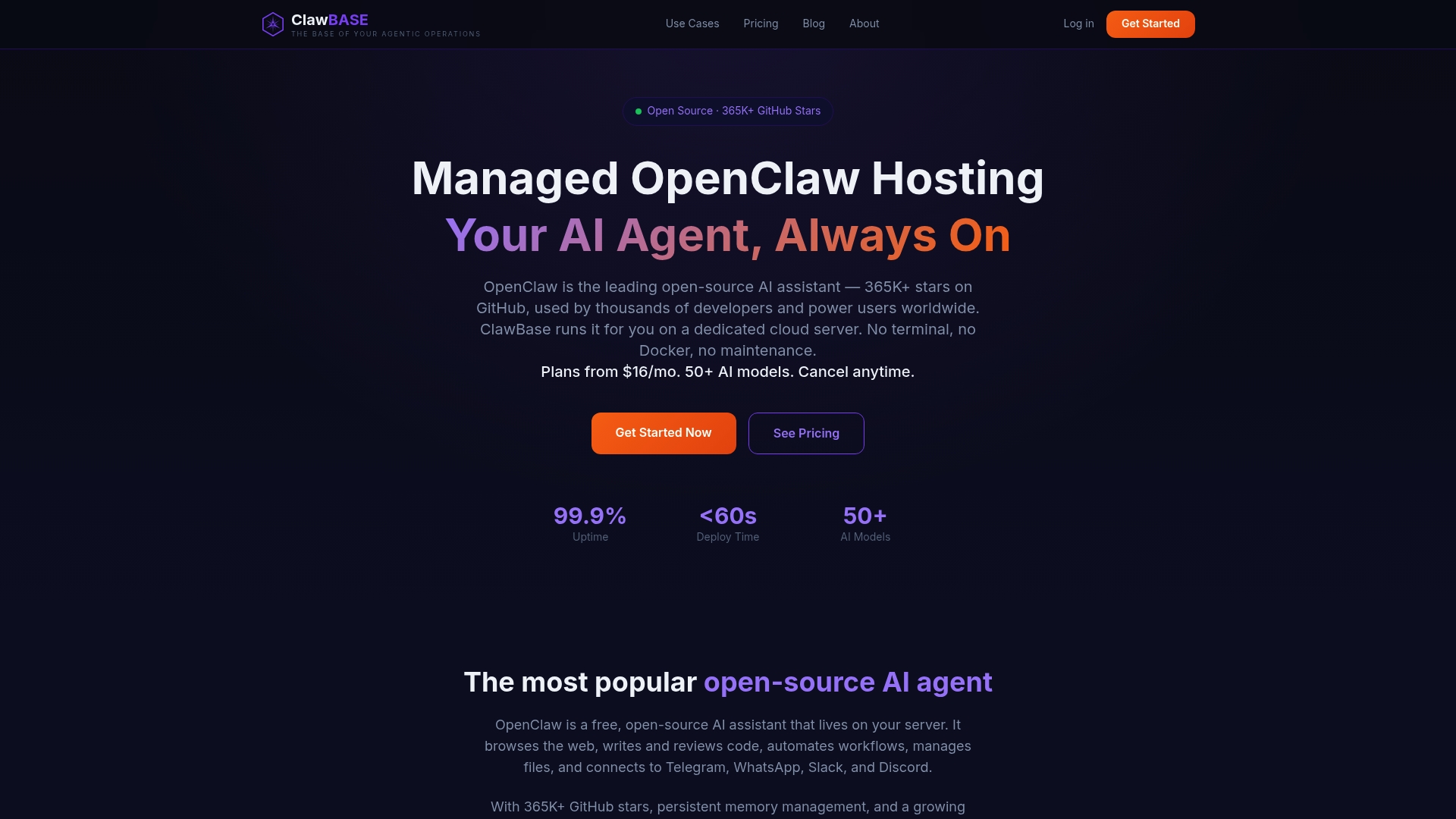
For beginners who want to skip the technical setup entirely, Clawbase handles the infrastructure so you can focus on the checklist steps that actually matter: choosing your task, writing better prompts, and building a daily habit. You can explore the full range of AI agent use cases to find the workflow that fits your situation best. No sysadmin skills required.
FAQ
What is a beginner AI assistant checklist?
A beginner AI assistant checklist is a step-by-step guide that helps new users pick a task, choose a tool, write prompts, and review outputs safely. It reduces decision fatigue and builds productive habits from the first session.
How long does it take to get comfortable with an AI assistant?
The one task, one week method takes 15–30 minutes daily over five to seven days to build real familiarity with an AI tool. Most beginners see consistent, usable results by day seven.
Do I need to pay for an AI assistant to get started?
No. ChatGPT, Claude, and Gemini all offer free browser-based tiers that require no installation. Paid setups in the $17–$37 per month range become useful once you need persistent memory or app integrations.
What is the most common beginner mistake with AI tools?
The most common mistake is expecting perfect output on the first try. AI assistants require iterative review and revision, typically two to three rounds, before output is ready to use.
How do I know when my AI setup is working well?
Track your sessions for 30 days and check whether output quality improved and whether you saved measurable time on your chosen task. Consistent improvement on both signals a working setup.