Top 5 OpenKBS.com Alternatives for 2026
2026-06-27
Comparing managed AI agent hosting services for OpenKBS-style agents exposes major differences in performance and operational overhead. Many platforms hide pricing, restrict runtime control, or demand heavy DevOps work even for small deployments. This comparison spans five OpenKBS.com alternatives so you can match each to your team's technical skills, budgeting needs, and deployment preferences.
Table of Contents
ClawBase
At a Glance
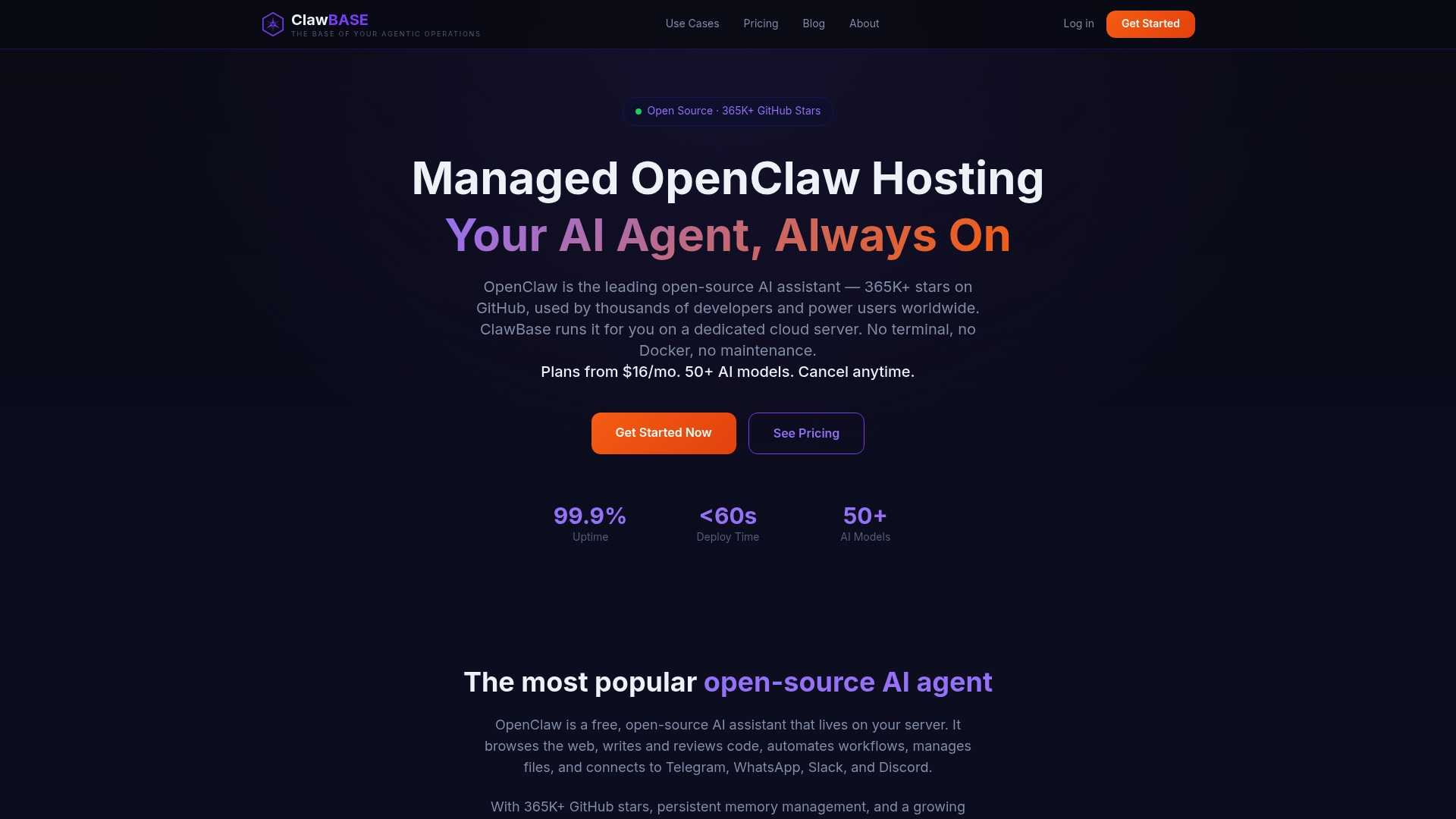
ClawBase advertises 99.9% uptime for its managed OpenClaw instances. The platform offers dedicated, encrypted AI instances with one click deployment and no server maintenance required. That setup targets people who want a private, always on assistant without sysadmin work.
Core Features
ClawBase runs dedicated, isolated instances of OpenClaw and handles automated updates, security, and scaling for you. The service includes persistent memory across sessions, daily backups, data export options, and support for over 50 AI models. That model count is reported by the vendor and drives automatic routing between models and pre built skillsets from ClawHub.
Key Differentiator
The clearest advantage is the combination of one click deployment to a dedicated server and fully managed, encrypted instances. That approach gives each customer a private environment with multi model routing and ready to use skillsets without managing Docker or servers. It simplifies launching an agent that integrates with messaging platforms while keeping instance isolation.
Pros
ClawBase removes the server setup step so you can focus on tasks instead of infrastructure. Persistent memory helps the agent keep context across conversations and sessions. Multi model routing and access to many models let you test different model behaviors without manual switching. Messaging platform connections let the agent live in Telegram, WhatsApp, or Discord and handle workflows inside those channels.
Cons
- Requires a basic understanding of API keys and messaging platform setup.
Notable Integrations
- Telegram
- Discord
Who It's For
Solo professionals, freelancers, and small teams who want private AI agents without server maintenance. Developers who want a managed OpenClaw instance for code review or automation will find it convenient. Non technical people who can follow API key steps can also run private bots in messaging platforms.
Unique Value Proposition
ClawBase reports support for over 50 AI models, and it pairs that model breadth with fully managed, dedicated instances. That combination reduces time spent on model orchestration and server ops. For teams that test different models or need context persistence, that model routing plus persistent memory changes the operational overhead.
Real World Use Case
A freelance developer deploys a dedicated instance to run automated code reviews and forward results to a Discord channel. The agent stores review context across sessions and uses different models for linting and natural language explanations. The developer avoids server maintenance while keeping all data in an encrypted, private instance.
Pricing
Plans start at $16/month, with monthly or annual billing and a seven day free trial on the Lite plan. Higher tiers cover greater performance and workload needs, and daily backups and export tools are included in managed plans.
Website: https://clawbase.to
Agntable
At a Glance
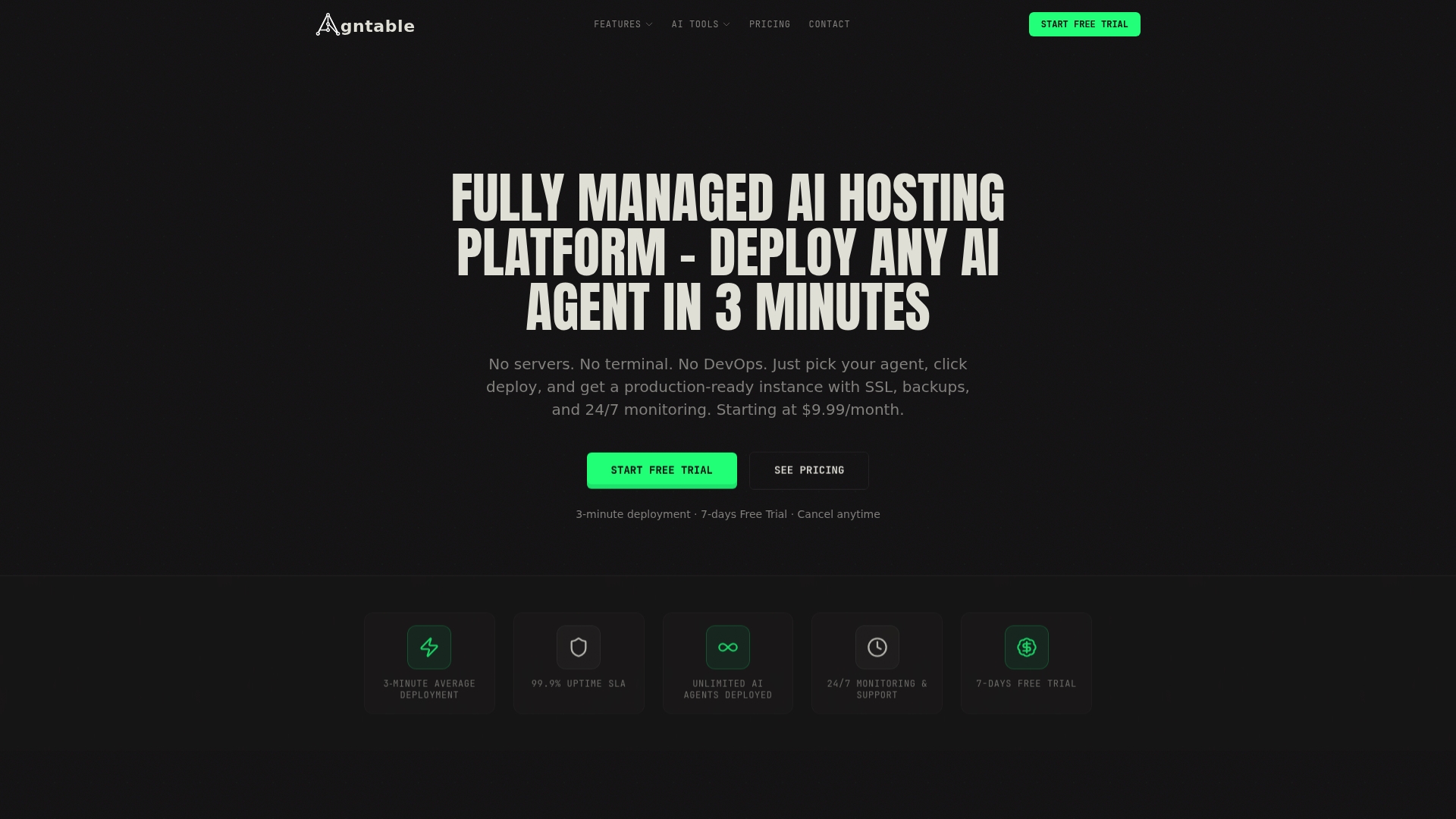
Agntable reports deployments in 3 minutes for open source AI agents. The vendor advertises turnkey, fully managed hosting that combines automatic updates, backups, and built in scaling. Pricing starts at $9.99/month, with additional storage sold separately.
Core Features
Agntable delivers one click deployment of AI agents alongside built in security features such as automatic SSL, patching, and network isolation. The platform includes daily backups with point in time data recovery and automatic updates that apply feature and security fixes. Resource scaling can be applied with a single action without planned downtime.
Key Differentiator
The single distinguishing claim is the turnkey, fully managed hosting that aims to get agents live in 3 minutes while handling security and infrastructure. That focus narrows the product to teams that prefer to avoid servers and DevOps work while retaining private deployments and control over agent selection.
Pros
Agntable reduces time to live by removing server setup, container management, and certificate handling, which benefits non technical creators and small teams. Built in security features and daily backups lower operational overhead for people who need a safer default configuration. Automatic updates and point in time recovery keep instances current without manual maintenance, and one click scaling helps when workloads spike.
Cons
- Limited configurability for advanced users who need deep environment control or custom runtime changes.
- Dependency on Agntable for uptime. Relying on the vendor adds risk if the platform has an outage.
- Pricing can grow if you add substantial external storage, since extra storage is billed per GiB.
When It May Not Fit
Teams that require full control of the runtime, custom network policies, or bespoke security audits will find Agntable restrictive. Organizations with strict on premise requirements or fixed vendor isolation rules may prefer a self managed approach. Advanced SRE teams who want low level access to containers and orchestration will likely find the platform too opinionated.
Who It's For
Solo creators, small teams, and non technical product owners who want fast, private deployment of open source AI agents without maintaining infrastructure. It fits teams that value quick experimentation and want to avoid managing servers, certificates, and backup scripts.
Real World Use Case
A marketing agency deploys several agents to handle data scraping, content generation, and chatbot interactions across client accounts. The team launches agents via the platform, scales resources for busy campaigns, and relies on automatic backups to roll back configuration if an update breaks an integration.
Pricing
Starting at $9.99/month with plans up to $49.99/month and a seven day free trial. Extra storage is available for $0.50/GiB per month and billed as an add on to base plans.
Website: https://agntable.com
RunAgent
At a Glance
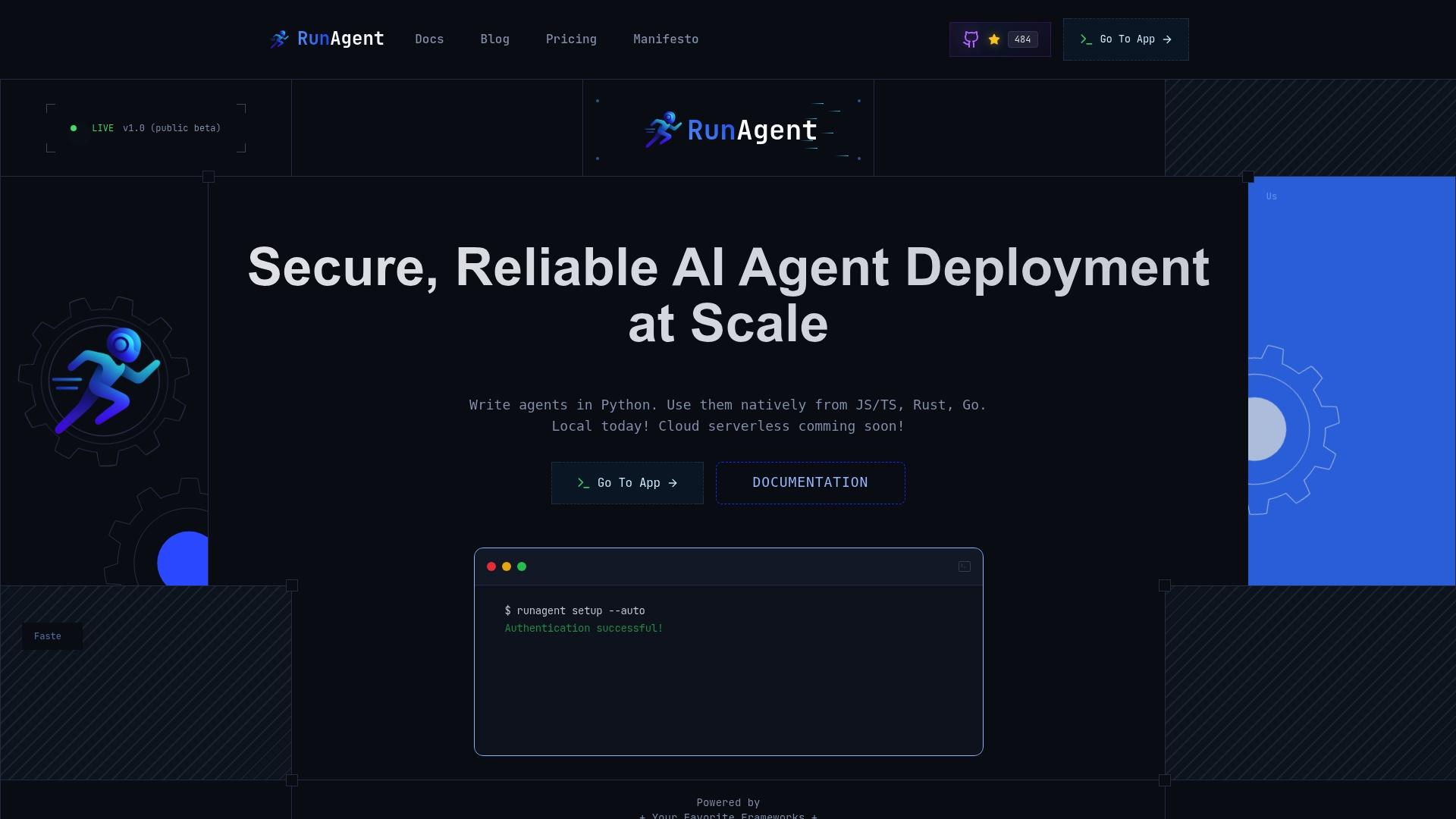
Local hot reloading and SDKs for Python, JavaScript, Rust, and Go drive RunAgent's development experience. The platform combines framework agnostic support for LangChain and LangGraph with CLI first deployment commands for local testing. RunAgent also advertises a serverless cloud option that handles auto scaling for production agent workloads.
Core Features
RunAgent offers multi-language SDK support for Python, JavaScript TypeScript, Rust, and Go while remaining framework agnostic for LangChain, LangGraph, or custom stacks. The product emphasizes developer tooling with local hot reloading and a CLI first command set for building and managing agents. For production, RunAgent provides RunAgent Cloud, a serverless environment with auto scaling and orchestration for stateful conversational agents.
Key Differentiator
RunAgent centers on agent first architecture and multi language SDKs rather than a single API model. That design targets stateful conversational systems that need persistent context, streaming outputs, and tool invocation. The vendor positions RunAgent as a bridge between local development and cloud scale orchestration for complex agent behaviors.
Pros
RunAgent supports multi language deployment, which reduces friction when teams mix Python, TypeScript, and compiled languages. The platform targets stateful, conversational agents and includes features for streaming responses and self correction of agent behavior. Local hot reloading and CLI first tooling speed iteration during development, and RunAgent Cloud offers a managed path to scale without rebuilding infrastructure.
Cons
- Limited independent reviews and third party assessments make maturity and stability harder to verify for new adopters.
- Pricing details are not widely published, which can complicate budgeting for small projects and proof of concept work.
- The abstracted infrastructure model departs from plain API usage and may require engineers to learn new deployment and runtime concepts.
When It May Not Fit
If your project needs transparent, fixed pricing tiers for small teams, RunAgent may be a poor fit. Teams that prefer direct API driven models instead of agent orchestration will face an architectural mismatch. Organizations that require extensive independent third party audits and community references should plan a longer evaluation period.
Who It's For
RunAgent suits developer teams and enterprises building multi language, stateful agents that need context retention and complex tool workflows. It fits groups that can invest in agent design and that value a managed path from local tests to cloud scale. The product is less suited for one-off scripts or simple request response integrations.
Real World Use Case
The vendor describes a company deploying a multi language customer service agent that handles thousands of concurrent conversations with context retention, tool invocation, and real time monitoring. That scenario shows RunAgent used for high concurrency, stateful dialog where agents call external tools to resolve requests. The setup highlights local development speed and a migration path to serverless production.
Pricing
The vendor does not provide standard public pricing. Pricing appears to be custom or usage based and may vary with cloud resources and managed services. Teams should contact RunAgent for quotes and expect to discuss scale and support needs.
Website: https://run-agent.ai
Phinite
At a Glance
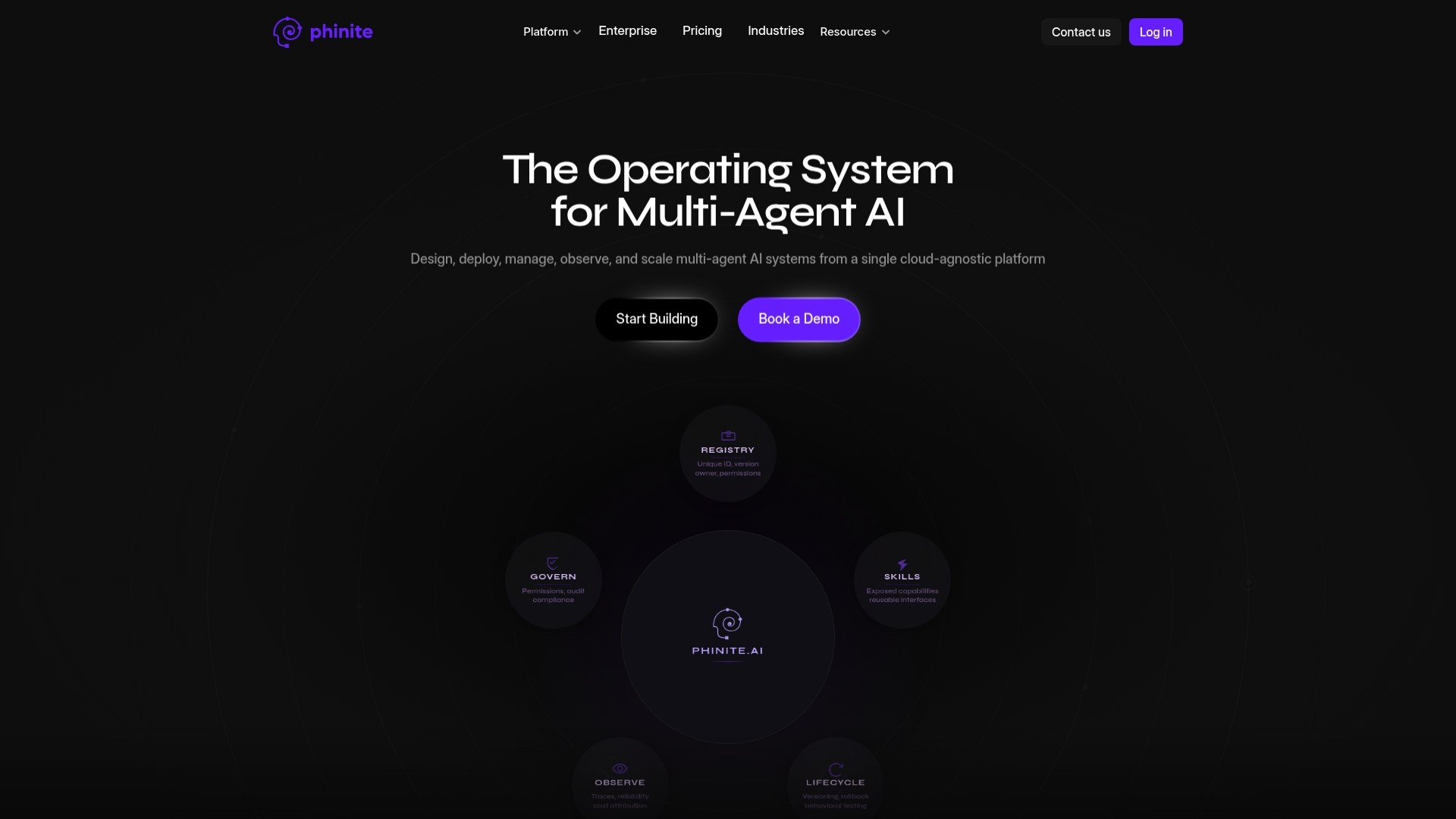
Version control, rollback, and behavioral testing for AI agents are core features of Phinite. This design places agent code and behavior under the same lifecycle controls that software teams use. The result is clearer change history, safer rollouts, and faster recovery from bad agent behavior.
Core Features
Phinite unifies agent development, deployment, and operations in a single interface that includes execution traces and decision visibility. It bundles governance tools with permissions, approvals, and environment separation so teams can manage compliance and access. Built in DevOps support covers isolated environments, rollback, and automated triggers for operational workflows.
Key Differentiator
Phinite centers lifecycle governance and observability together rather than treating them as add ons. That unified focus makes it easier to run many cooperating agents while keeping audits and approvals visible. For organizations that must prove how agents decide and act, this single interface reduces tool sprawl and centralizes control.
Pros
Phinite delivers comprehensive lifecycle management that links development artifacts to runtime behavior and audit trails. Its governance model includes permissions and approvals that match enterprise compliance processes while multi tenancy and private cloud options support segregated fleets of agents. The built in DevOps tooling simplifies deployments and rollbacks, and observability features reveal execution traces and decision points for root cause analysis.
Cons
- Onboarding can be complex for smaller teams because the platform assumes enterprise scale and formal processes.
- Pricing details require direct contact, which makes short term cost evaluation slower for evaluation projects.
- The platform focuses on large scale orchestration and may be overkill for single agent prototypes or individual practitioners.
When It May Not Fit
Phinite may not suit teams that need a self serve, lightweight agent runner for rapid prototypes. Small startups with one or two experimental agents will likely find the governance and environment management excessive. Organizations that require transparent fixed pricing for quick budgeting might prefer a vendor with published tiered plans.
Notable Integrations
Phinite exposes APIs for enterprise tools so you can trigger agents from existing systems and capture events. It supports custom integrations with legacy infrastructure and third party services through those APIs. That flexibility lets engineering teams wire Phinite into CI pipelines, ticketing systems, and existing monitoring stacks.
Who It's For
Large organizations and centralized AI teams that operate dozens or hundreds of agents will benefit most. Security conscious departments that require audit trails, approvals, and environment separation will find the governance model useful. Teams that already have DevOps practices and dedicated infrastructure staff will extract the most value.
Real World Use Case
A multinational financial firm deploys Phinite to run hundreds of agents across support, compliance, and risk workflows. The firm uses version control and rollback to test new agent behaviors in isolated environments before production. Observability tools supply decision traces that compliance teams use during audits.
Pricing
Phinite lists a free plan and scaled paid plans with features and usage based on tiers, but enterprise pricing requires contacting the vendor. That sales driven model is common for products that tailor deployments and support to large customers. Expect custom quotes for multi tenancy or private cloud deployments.
Website: https://phinite.ai
Calljmp
At a Glance
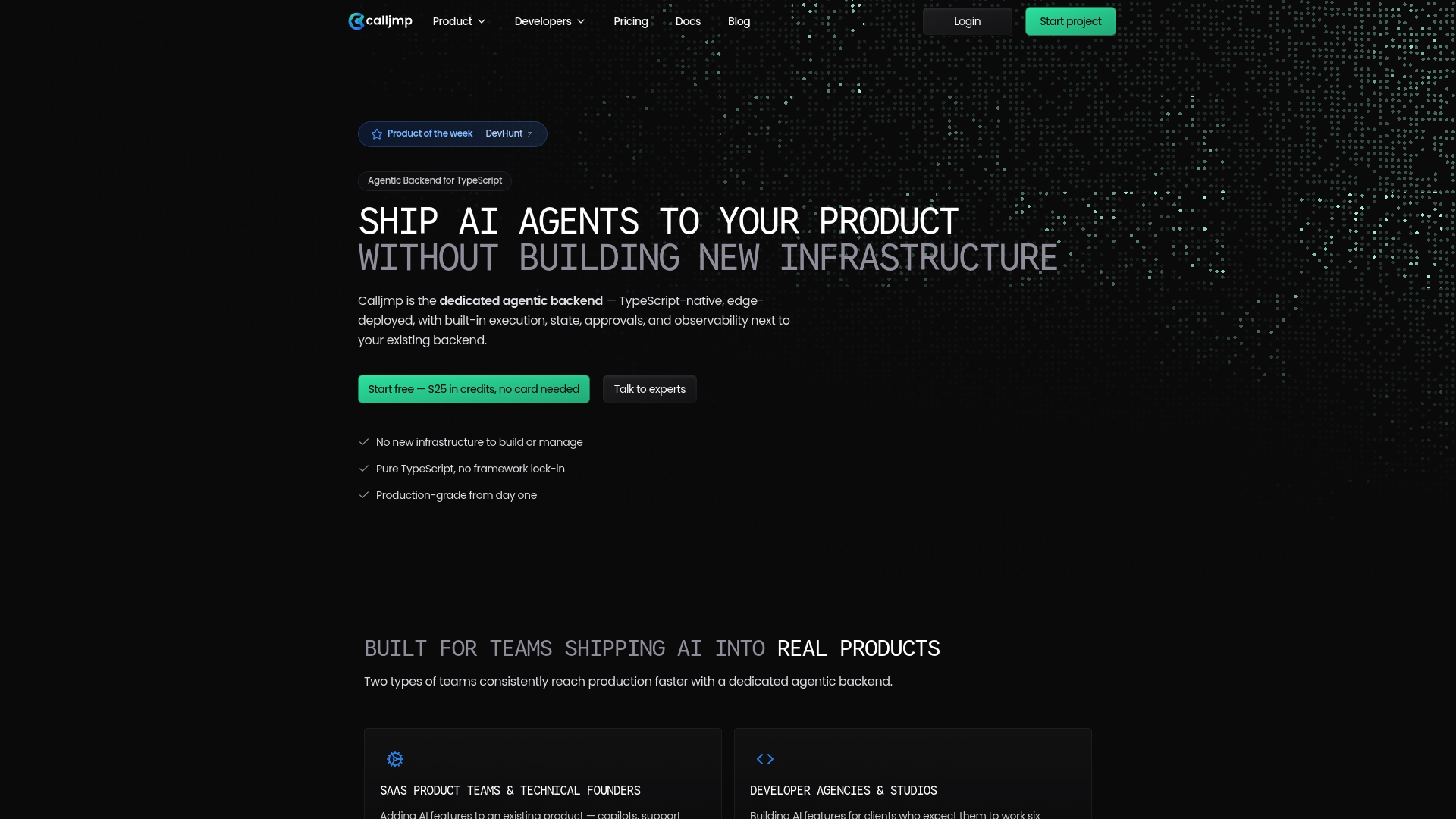
TypeScript agents run on an edge deployed runtime with built-in state, retries, and human approval. The platform focuses on code-first agent development, so teams can version and test agents as application code. Observability is available through logs, traces, and metrics to monitor agents in production.
Core Features
Calljmp centers on TypeScript native agent development and a managed edge deployed runtime that scales with demand. It includes built in execution control, state management, retry handling, and human approval gates. The platform surfaces observability with logs, traces, and metrics, so you can monitor agents in production and connect workflows to existing APIs and databases as tools.
Key Differentiator
The single standout is its TypeScript native approach combined with an edge deployed runtime and built in orchestration primitives. That combination lets teams treat agents like version controlled application code while keeping runtime concerns off the development backlog. This design favors teams that want tight developer workflows and full production observability.
Pros
Calljmp lets development teams deploy AI agents directly from TypeScript code, which reduces context switching between code and config. The managed runtime removes the need to operate agent infrastructure, lowering operational load while supporting long running workflows and retries. Full observability and built in human approval gates make it practical to run production grade agents tied to product features.
Cons
- The platform depends on TypeScript expertise, which raises the learning curve for teams that use other languages.
- Public documentation of connectors and third party integrations is limited, so uncommon tools may need custom adapters.
- Pricing uses usage based billing and counts actions, queries, web scrapes, and tokens, which can complicate cost forecasting for high volume workloads.
- The marketing materials do not list many sample enterprise deployment patterns, so large scale operational questions may require vendor consultation.
When It May Not Fit
Teams that lack TypeScript skills or that standardize on a different stack will likely face friction adopting this platform. Organizations that need many out of the box connectors to niche enterprise systems will probably build custom integrations. If fixed per seat billing and predictable monthly costs are a strict requirement, the usage based model may not match procurement needs.
Who It's For
Calljmp targets developer teams and product companies that want to embed agents directly into their applications using a code first approach. It fits teams that value version control, testing, and direct ownership of agent logic. Product engineers building copilots, support automations, or backend workflows will find the model familiar.
Real World Use Case
A SaaS team writes a TypeScript agent that queries internal knowledge bases and escalates complex tickets to humans. The agent runs at the edge, retries external API calls, and pauses for an approval step before executing billing changes. Logs and traces expose execution paths so engineers debug failed flows quickly.
Pricing
Pricing is usage based and starts with a free $25 credit. Plans include Solo at $20/month, Pro at $99/month, and custom enterprise options, with billing for actions, queries, web scrapes, and tokens.
Website: https://calljmp.com
Comparison of alternatives
ClawBase excels through its one-click deployment process coupled with dedicated and encrypted AI instances, setting a unique standard among the available solutions. However, when selecting a managed AI hosting solution, different priorities such as affordability, development flexibility, or governance models could influence the decision.
Deployment and infrastructure simplicity
ClawBase delivers a streamlined process with its capability to maintain isolated, encrypted agent hubs, removing server management concerns. Agntable also offers a quick startup experience but shifts focus towards entry-level affordability. RunAgent specializes in developer-centric tooling with multi-language SDKs and hot-reloading, aligning with teams running active developments for tailored AI.
Governance and affordability options
Phinite leads enterprise-oriented scenarios with its version control, governance processes, and lifecycle management features, which extend operational control and security assurances. On the other hand, Agntable appeals to budget-conscious setups through its lowest pricing in this set, starting at $9.99/month, although additional scalability incurs costs.
Best fit
- Focused teams demanding encrypted AI instances with multi-model support will rely on ClawBase.
- Budget-conscious organizations seeking essential managed hosting features at competitive rates will prefer Agntable.
- Teams valuing multi-language SDKs or deep iteration features during system development should consider RunAgent.
- Enterprises needing full lifecycle governance and compliance should select Phinite for its enterprise-grade controls.
Our pick
ClawBase stands out with its dedicated AI environments, combining ease of deployment with security features. While alternatives like Agntable excel in affordability and RunAgent in development tooling, ClawBase remains the most compelling choice for users requiring encapsulated and scalable AI solutions without ongoing maintenance efforts.
This table compares managed AI agent hosting platforms to assist in choosing a solution tailored to your needs.
| **Platform** | **Key Differentiator** | **Best For** | **Pricing** | **Limitation** |
|---|---|---|---|---|
| ClawBase | Dedicated encrypted instances with multi-model routing | Small teams, non-technical users | $16/month, 7-day free trial | Requires API key setup |
| Agntable | Fully managed hosting with rapid deployment | Non-technical creators, small teams | $9.99/month | Limited configurability |
| RunAgent | Multi-language SDK support and local hot-reloading | Developer teams requiring multi-language support | Price not published | Pricing details not publicly available |
| Phinite | Lifecycle governance with built-in observability | Large organizations and centralized AI teams | Free plan, contact for enterprise pricing | Assumes enterprise-scale processes |
| Calljmp | TypeScript-native agent development with managed runtime | Developer teams using TypeScript for product integration | From $20/month | TypeScript expertise required |
Choosing the Right Alternative to openkbs.com
The search for reliable openkbs.com alternatives often highlights challenges such as complex setup and ongoing server maintenance. Clawbase solves these issues by offering one-click deployment of dedicated OpenClaw instances. This means users get a private and encrypted AI agent that requires no sysadmin knowledge while supporting over 50 AI models and persistent memory across sessions.
Benefits users find with Clawbase include:
- Simplified deployment without technical barriers
- Integration with popular platforms like Telegram and Discord
- Stable 99.9% uptime and automatic updates
Learn how Clawbase makes it easy to run private AI agents without server hassles by visiting Clawbase. Test the platform to automate your workflows and keep your AI accessible and secure with minimal effort.
FAQ
#### What features make Clawbase a suitable choice for managed AI agent hosting?
Clawbase provides dedicated, encrypted AI instances with 99.9% uptime and one-click deployment. These features allow users to launch a private assistant without needing server maintenance, making it an attractive option for those who want hassle-free operation.
#### What is the difference in pricing between Clawbase and Agntable?
Agntable offers plans starting at $9.99/month, while Clawbase starts at $16/month. This pricing variation indicates that Agntable might be more suitable for users with tighter budgets, while Clawbase appeals to those seeking a more feature-rich environment.
#### Can Clawbase handle multiple AI models for specialized tasks?
Clawbase supports over 50 AI models and enables routing between them. This feature allows users to test different model behaviors without manual intervention, increasing versatility in task handling.
#### How does Clawbase compare to RunAgent in terms of local development support?
RunAgent excels in providing multi-language SDK support and local hot reloading, which benefits developers focused on building custom solutions. In contrast, Clawbase simplifies the deployment process for users who prefer a fully managed environment without development overhead.
#### Is persistent memory a feature of Clawbase?
Yes, Clawbase includes persistent memory across sessions, helping the AI maintain context during conversations. This feature enhances user experience by allowing more cohesive and natural interactions with the assistant.