Teams' Safer Telegram Automation: Dedupe, Fact Check & Managed Hosting
2026-09-29

Yes, you can automate a Telegram channel with AI for scheduled publishing, aggregated news, and auto-replies, but the smart way to start is semi-automated, with scoped credentials and audit logs in place before you flip on anything fully hands-off. AI can already handle sourcing, rewriting, image generation, scheduling, and posting. The trade-off is that speed without guardrails is how channels get banned or flooded with junk.
***
> TL;DR:
>
> - Using a staged pipeline for automation allows better control, testing, and error tracking than relying on a single large prompt for sourcing, rewriting, and posting content.
> - Securing credentials with scoped tokens and implementing audit logs are crucial for safety, especially before enabling full automation or allowing the bot to operate without oversight.
> - Automating with AI cost roughly 1 to 2 cents per post, and balancing manual review with auto-publishing improves quality while managing risks effectively.
> - Telegram’s bot configuration and permissions should be minimal, with rate pacing and circuit breakers in place to prevent flooding or bans.
> - Managed hosting like ClawBase simplifies deployment and enforcement of safety patterns, providing a quick, reliable way to run AI-based Telegram automation at low cost.
***
Table of Contents
- From scanning to publishing: how the automation pipeline works
- The Telegram-specific building blocks you actually need to configure
- Step-by-step setup: connecting an AI workflow to your channel safely
- Security and permissions: what to lock down first
- Choosing your tooling: no-code, self-hosted, or managed
- Copyable workflow templates for common channel automations
- Where managed OpenClaw hosting fits into this setup
- Quick rules for a safer rollout
- Get a managed path to OpenClaw-powered Telegram automation
- Key developer docs and example projects worth bookmarking
- Sources
- FAQ
From scanning to publishing: how the automation pipeline works
I've tested enough of these setups to say this plainly: a staged pipeline beats a single giant prompt almost every time. When you ask one model to "find news, check it, rewrite it, and post it," you lose visibility into where things go wrong. Break it into stages instead, and each one becomes something you can test, log, and fix independently.
A typical pipeline looks like this:
- Source monitoring: RSS feeds, Telegram channels, or APIs feed raw candidate posts into the system.
- Deduplication: incoming items get hashed and checked against a recent window so the same story doesn't post twice.
- Verification: a fact-check or relevance-scoring pass filters out low-quality or unverified items.
- Rewrite and humanize: an AI model rewrites the piece in your channel's voice.
- Media generation: optional image or graphic creation to accompany the post.
- Approval and scheduling: either a human reviews the queued post or it passes an auto-publish threshold.
- Publish and analytics: the post goes live, and engagement data feeds back into scoring.
Manual review fits best at the verification and approval stages early on. Once your acceptance rate on a category is consistently high, that's your signal to raise the auto-publish share for that category rather than the whole channel at once.
The Telegram-specific building blocks you actually need to configure
Telegram's own developer documentation covers how bots work, including registration through BotFather and the fact that bots run on servers the operator controls, meaning you own the responsibility for what the bot does. Telegram's 2026 update also documents streaming responses and bot-to-bot communication, along with the ability to mention a bot by @username in any chat, which matters if you're building interactive AI features rather than pure posting.
A few configuration choices shape everything downstream:
- Session strings vs. bot tokens: a scoped bot token limits what the automation can touch; a full session string behaves like a logged-in account and carries far more risk.
- Deduplication windows: open-source pipelines like TelegramChannelAI commonly use a hash window lasting a few days so exact duplicates get blocked while a story can resurface if it develops.
- Image sizing: the same project generates accompanying images at 768x432, a practical size for channel post previews.
- Scheduling and pacing: spacing out posts and watching analytics hooks prevents you from tripping Telegram's flood limits.
One data point worth remembering: community write-ups from projects like TelegramChannelAI estimate a cost of roughly $0.01 to $0.02 per post when combining text generation and image generation through a unified AI backend, which is low enough that cost rarely forces the auto versus semi-auto decision on its own.
Step-by-step setup: connecting an AI workflow to your channel safely
Here's the sequence I'd actually follow, in order:
- Register your bot. Use BotFather to create a bot, or set up a scoped endpoint if you're using an integration layer. A scoped bot token beats a full session string almost every time, because it limits blast radius if something leaks.
- Define your source list and thresholds. Decide which feeds or channels count as inputs, then set your dedupe window (48 hours is a sane default) and the relevance score that determines whether an item reaches the review queue at all.
- Grant minimal admin rights. Give the bot only what it needs, typically the ability to post and maybe edit messages. Skip pinning, deleting, or member management unless you have a specific reason.
- Test in a staging channel. Run the full pipeline on a private test channel before pointing it at your real audience. This catches formatting bugs and tone mismatches cheaply.
- Turn on audit logging and a human approval queue. Every publish action should leave a trace, and every post should pass through a human decision until you trust the pipeline's judgment.
- Schedule runs and pace them. Space out automated posting windows to respect Telegram's rate limits and avoid looking like spam to the platform or your subscribers.
Pro Tip: *Keep a manual kill switch wired into your scheduler so you can pause all auto-publishing in one action if something goes wrong overnight.*
Security and permissions: what to lock down first
The security model here isn't complicated, but it's easy to skip if you're moving fast. A scoped-endpoint approach, like the one described in the secure-telegram-mcp README, re-checks permissions on every single call and fails closed when rights are missing, which is a meaningfully safer pattern than a broad session token that can touch anything.
Keep these in place:
- Prefer scoped bot tokens or scoped endpoints over full-account session strings, and encrypt stored credentials with regular key rotation.
- Guard write operations with human confirmation or a fail-closed gate, and log every publish action for later review.
- Grant only the admin rights you need:
can_post_messagesand, if truly required,can_edit_messages. Treatcan_delete_messageswith caution, and skip any right you can't justify. - Add rate-aware pacing and circuit breakers so a runaway loop doesn't trigger a flood ban.
> Endpoints that re-verify permissions on each call and fail closed on missing rights meaningfully reduce the risk of connecting a language model to a messaging platform.
Choosing your tooling: no-code, self-hosted, or managed
The right tool depends less on preference and more on how much maintenance you're willing to own.
- No-code connectors get you running fast and suit marketers handling straightforward scheduling or reposting, though they tend to hit a ceiling once you need custom scoring logic.
- Self-hosted, open-source pipelines, like Autogram, give you full control over scoring thresholds and source categories at a lower direct cost, but you're the one patching, monitoring, and debugging them.
- Managed hosting is the fastest secure path to production for teams without a dedicated engineer, since the provider handles uptime, patching, and often the credential scoping for you.
Whichever route you pick, attach image-generation or fact-checking services through scoped API calls rather than embedding a session credential inside a third-party tool. That way, a compromised integration never gets more access than the one task it was built for.
Copyable workflow templates for common channel automations
Three patterns cover most of what people actually build:
- News aggregator: scanner pulls candidate stories, a 48-hour dedupe filter removes repeats, a fact-check pass verifies claims, an AI rewrite adapts tone, a review queue holds it for a human glance, then it publishes with an optional poll or generated image attached.
- Scheduled content: a draft pool of evergreen ideas gets rewritten by an editor pass, paired with generated images, placed on a calendar scheduler, and published automatically since the content carries low risk.
- Auto-reply: an incoming message triggers a classifier, which returns a templated reply for common questions and escalates anything below a confidence threshold to a human moderator.
Each template follows the same shape: inputs, a gate that filters or checks, and a defined output, which is exactly what makes them easy to adapt to a niche channel.
Where managed OpenClaw hosting fits into this setup
Everything above assumes you're willing to wire up credentials, hosting, and monitoring yourself. ClawBase takes a different route: one-click deployment of OpenClaw, an open-source AI assistant, on a dedicated server, with Telegram integration, persistent memory, and access to more than 50 AI models built in from the start.
A managed host can enforce scoped endpoints, audit logs, and uptime guarantees as part of the base setup rather than something you configure by hand, which shortens the gap between a working prototype and something you'd trust running unattended. That matters most for non-technical teams, or anyone who wants the safety patterns in this guide enforced by default rather than assembled piece by piece.

Quick rules for a safer rollout
Start semi-automatic, with a visible kill switch, every time. Track your review queue's acceptance rate and treat it as seriously as model choice, since a well-tuned publishing threshold often matters more than which AI you're using. When a post touches anything sensitive, default to manual approval, no exceptions.
> *— Iosif Peterfi*
Get a managed path to OpenClaw-powered Telegram automation
Building the pipeline above from scratch takes real setup time: servers, credential scoping, monitoring, patching. ClawBase skips that by giving you a private, always-on OpenClaw agent on a dedicated server with Telegram already wired in, persistent memory across sessions, and no sysadmin work required on your end.
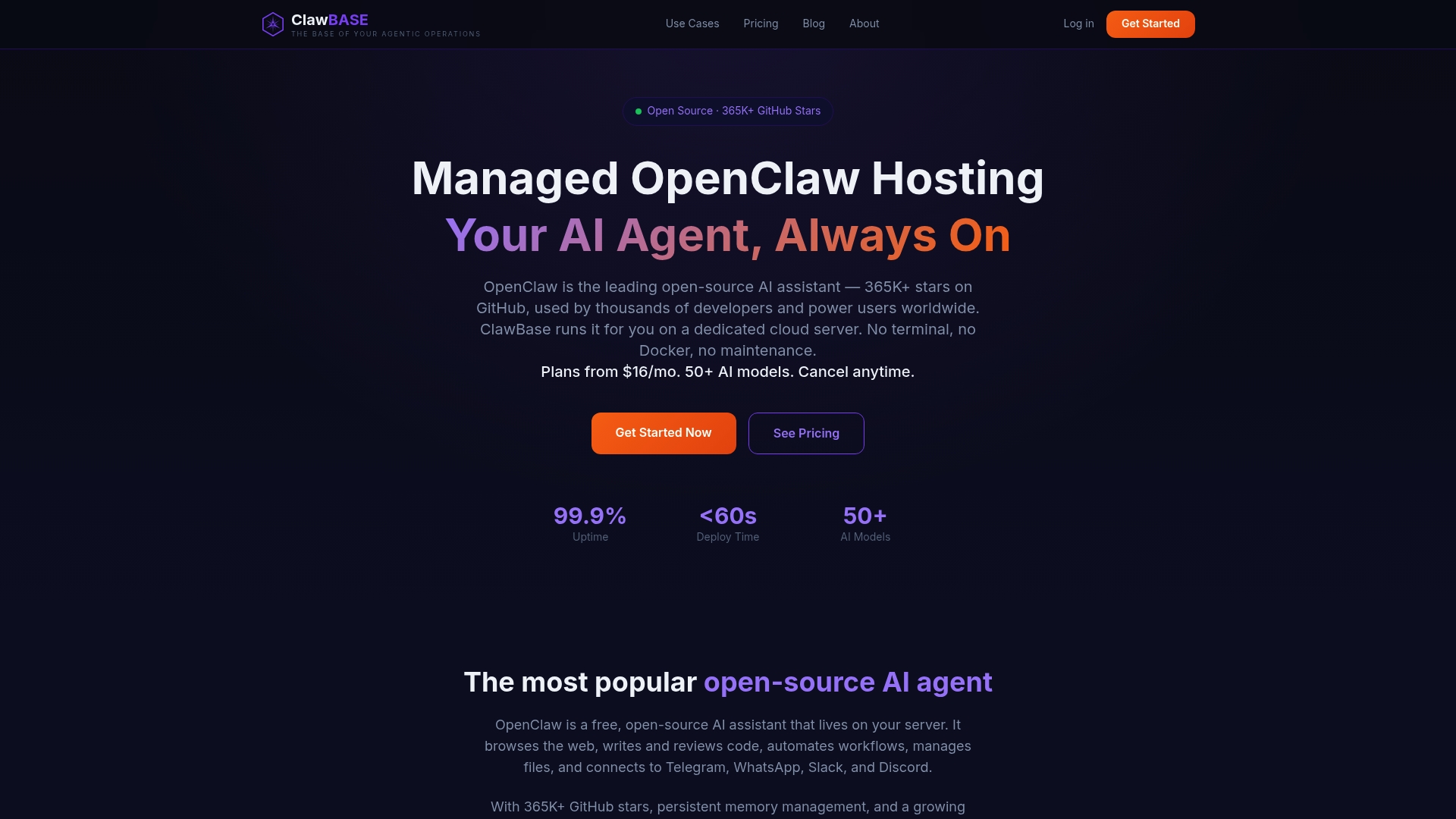
- The LITE plan starts at $16 per month or $199 per year.
- The PRO plan runs $33 per month or $399 per year.
- The MAX plan is $66 per month or $799 per year.
If you want to see how other teams use AI agents for automation before committing, the OpenClaw use cases page walks through practical examples, including channel and workflow automation. For teams evaluating AI-driven guest or customer communication specifically, Hotellia's chatbot integration guide is a useful reference point on how bots handle real conversational workflows. Start a trial and connect your first channel at ClawBase.
Key developer docs and example projects worth bookmarking
- Telegram's bot documentation covers registration, permissions, and the Bot API basics you'll configure first.
- The Admin and rights API reference lists every granular admin permission a channel bot can hold.
- TelegramChannelAI and Autogram are open-source pipelines worth reading for real implementation patterns.
Sources
- Bots: An introduction for developers — Telegram
- Telegram blog: AI Bot revolution — Telegram
- rrs1979/TelegramChannelAI — GitHub
- Autogram — GitHub
FAQ
Is there a Telegram channel about artificial intelligence?
Telegram hosts many channels covering artificial intelligence topics, ranging from news aggregation to model-specific discussion, though availability and quality vary by channel and aren't centrally indexed by Telegram itself. Search within the Telegram app for AI-focused channels and review each one's posting history before subscribing.
Is there an AI bot on Telegram?
Yes, Telegram supports AI-driven bots built through its Bot API, including features like streaming responses and bot-to-bot communication documented in Telegram's 2026 AI bot update. Anyone can register one through BotFather, so the bot's quality and safety depend entirely on its individual operator.
How can I use Telegram for automation?
You connect an AI workflow to a bot token or scoped endpoint, then chain together stages like source scanning, deduplication, rewriting, and scheduled publishing, ideally with a human review queue before anything goes live. Tools like TelegramChannelAI and managed hosts such as ClawBase both offer starting points depending on how much setup you want to handle yourself.
Is an AI bot on Telegram legit?
Legitimacy comes down to the operator, not the platform: Telegram explains that bots run on servers the developer controls, and Telegram does not vouch for third-party bot behavior. Check a bot's privacy policy, permissions, and support contact before trusting it with your channel or personal data.